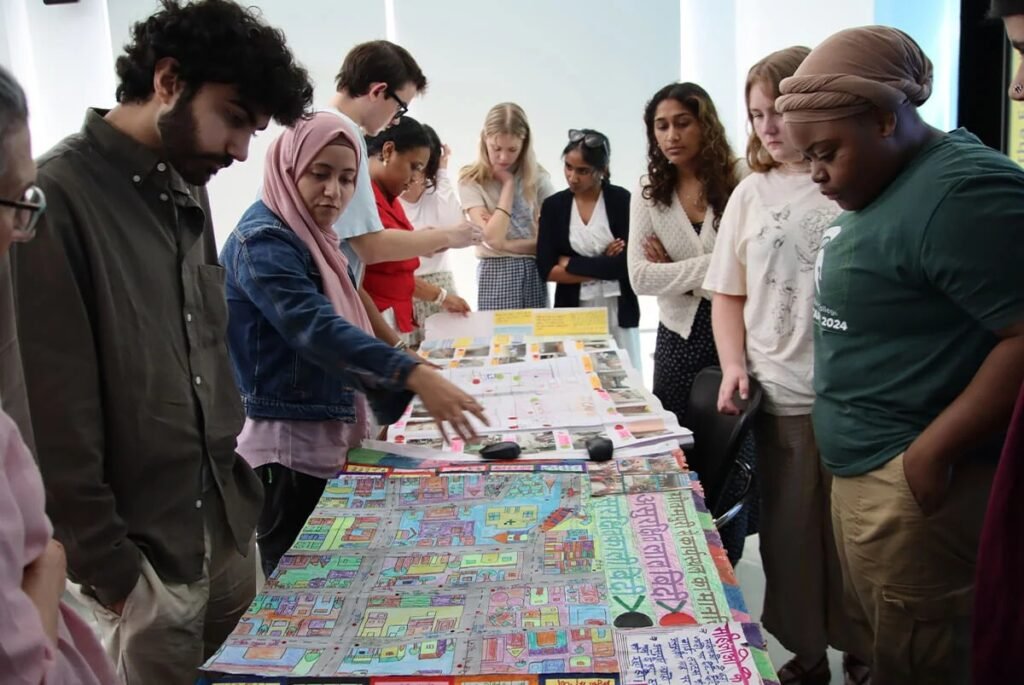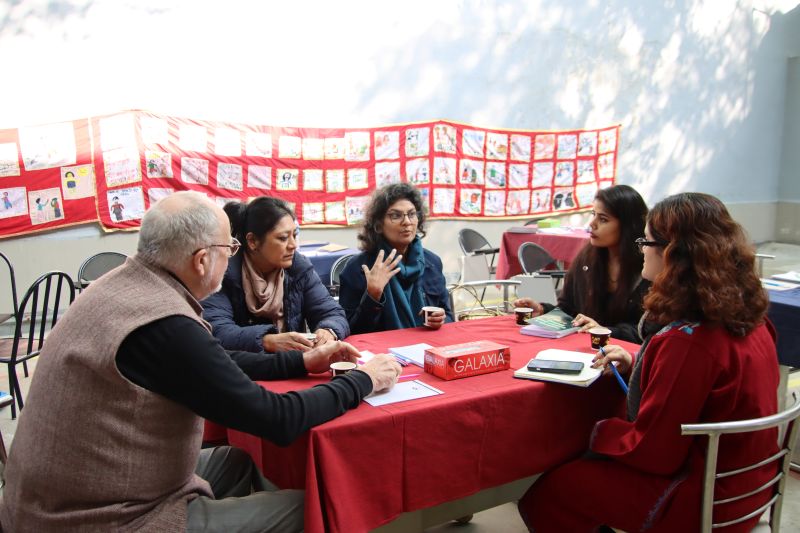
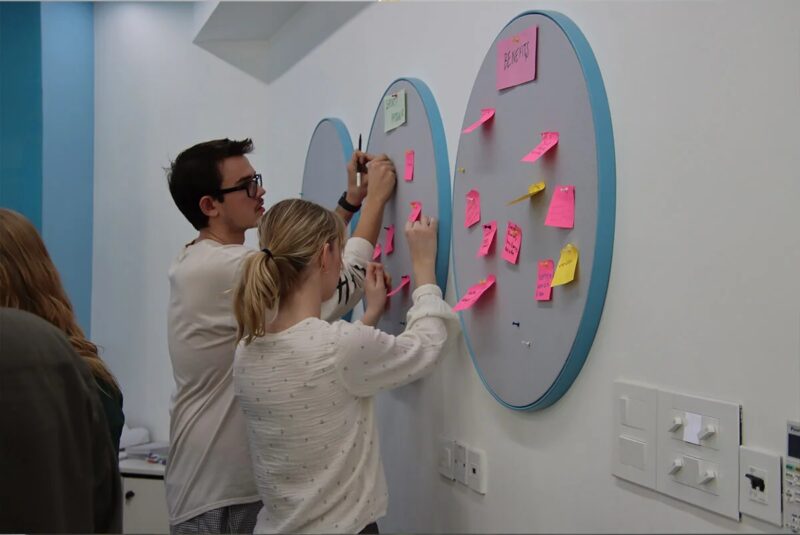
Ever since 2010, PRIA International Academy (PIA) has been facilitating regular learning visits to India for students and faculties from various Higher Education Institutions (HEI) from around the world.
The importance of HEIs lies in driving innovation, empowering individuals with skills, addressing societal challenges through research, and deepening their knowledge of community realities. Through curated HEI visits, PIA bridges theory and lived experience, cultivating empathy, reflexivity, and a nuanced understanding of global citizenship that shapes learners into true global citizens.
It equips students with awareness of social, political, and economic realities beyond their own contexts, and an understanding of how local struggles are embedded in global systems.
The COVID-19 pandemic brought major changes to Higher Education Institutions (HEIs), forcing them to shift from traditional face-to face learning to digital systems. Due to the pandemic’s sudden halt to international travel, educators everywhere were induced to reconsider experiential learning. The disruption was particularly severe for programs based on field-based pedagogy. During this time, PRIA Academy adapted its long-standing HEI engagement model into a virtual field school format.
A Global Leadership Virtual Field School was intended to create an interactive opportunity to engage with community leaders in other parts of the world. This educational format was valuable for promoting transformative pedagogy in both content and process, spurring innovative teaching, despite the limitations.
Without compromising depth, rationality, or transformative impact, a conventional international field school was converted into a fully online, participatory learning environment. This blog examines how a graduate-level leadership course, drawing PRIA’s practice of participatory pedagogy and Transformative Learning Theory, offered an influential model for inclusive and justice-oriented education through a virtual Field School.
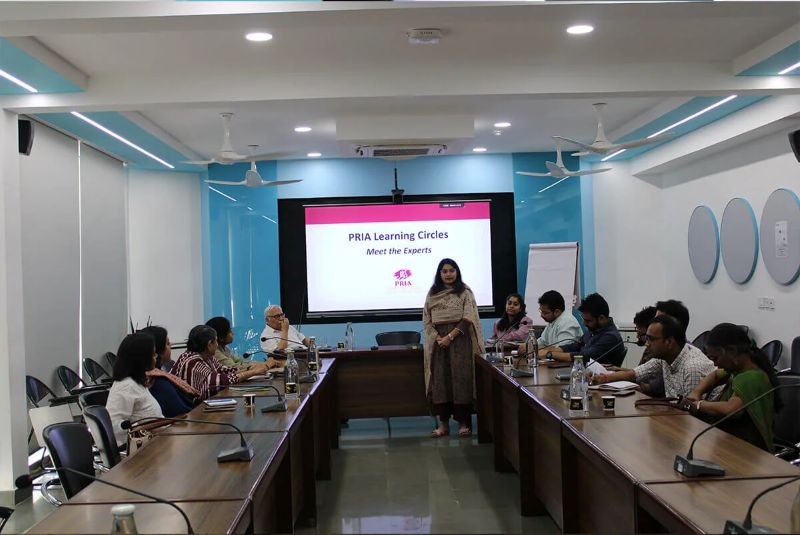
Reimagining the Field School Experience
Field schools directly engage students with the communities that are experiencing the social, political, and economic realities that are studying outside the classroom. Faculty and partners from Royal Roads University and Participatory Research in Asia (PRIA) reimagined the experience in a virtual format when an in-person field school in India was no longer viable.
The Global Leadership Virtual Field School was created purposefully to maintain the relational, dialogic, and experiential core of field-based learning rather than replicating lectures online. During the seven weeks of the virtual site, the graduate students engaged with grassroots initiatives on women’s leadership, youth empowerment, informal labour, urban governance, and gender justice and visited community groups across India.
The Transformative Learning Theory
The principal of virtual field school was the Transformative Learning Theory, which emphasizes critical reflection, perspective transformation, and collective meaning making through experience. The rational, emotional, social, and, for some students, spiritual aspects of transformation were all incorporated into the course design.
In the process, students weren’t just passive information users. The presumptions on privilege, power, leadership, and culture were asked to examine by the students. For grassroot activism, the ‘from below’ was investigated especially in marginalized communities, through organized reflection, discussion, and exposure to a variety of lived experiences. Through such interactions, students enhanced their capacity to develop supportive, reciprocal, and productive relationships with people of different backgrounds.
The key learning objectives included were:
- Learning about the Crafting Intercultural and Intersectional Analyses of Leadership and Power
- Conceptualizing culture in terms of complexity, dynamism,
- Thinking about Positionality and Paradigm of Leadership
- Adjusting individual leadership styles in line with new learning
The Virtual Field School experience occurred during each virtual site visit; a carefully structured learning cycle involved the tasks:
- Preparation: To understand the context and issues the students got engaged with materials, videos, and community developed resources.
- Site Visits: The interaction between community leaders and students during real-time Zoom sessions were dialogical in nature rather than extractive in form.
- Facilitated Meaning Making: The sessions conducted by PRIA facilitators as follow-up, helped students make meaning of nuances and context and theoretical linkages.
- Asynchronous Reflection: The reflective thinking time was enhanced as the online forums allowed ample time for reflective thinking and the ability to share ideas.
- Applied Assessment: The students got encouraged by the team-based multimedia projects. This helped them to integrate their learning ad bridge theory and practice.
This rhythm was repeated across five thematic site visits, enabling cumulative learning and deeper engagement over time. This reflects PRIA Academy’s commitment to non-extractive HEI partnerships, where learning flows in multiple directions.
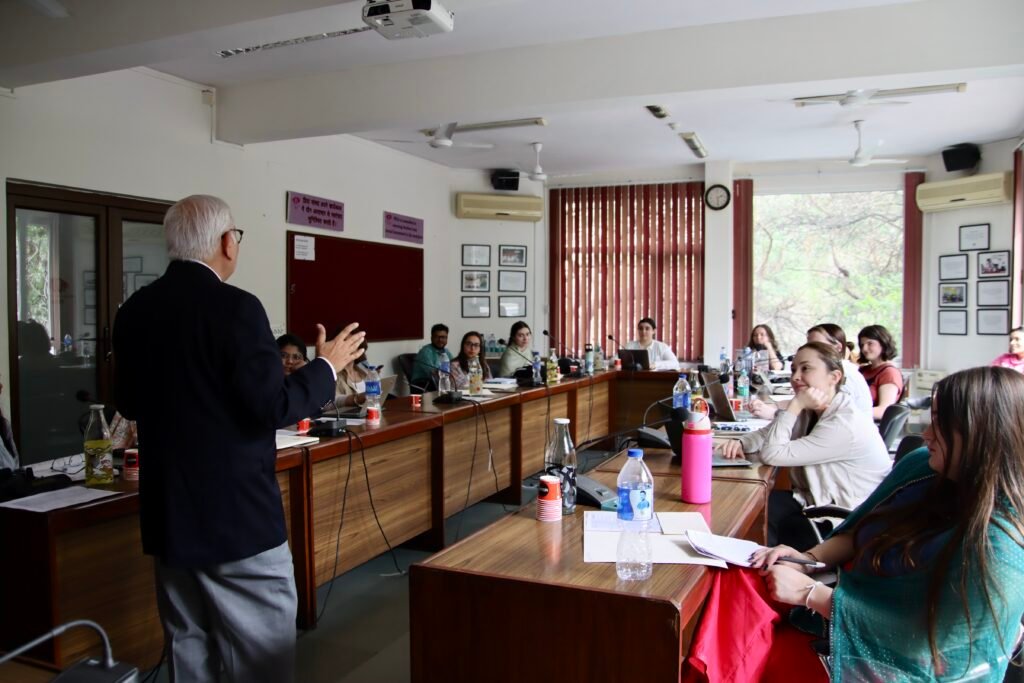
Learning beyond borders
By moving the field school online, PRIA Academy demonstrated how HEI visits can become more accessible, inclusive, and scalable, allowing PRIA to engage a broader range of institutions and learners. All this ensured accessibility for students in terms of participation, including teaching practices, the use of closed captioning, clear visual descriptions, translation capabilities, and strategic pacing with diverse considerations.
The Global Leadership Virtual Field School showed how powerful education can happen on-line, braced by transformational vision. It is a demonstration of PRIA Academy’s role as a strategic partner to higher education institutions. For universities seeking meaningful global engagement, PRIA Academy offers a proven pathway—one that combines scholarship, community wisdom, and transformative pedagogy into a shared learning journey.
To know more about HEI Learning Visits contact us at pia@pria.org or visit us at https://www.priaacademy.org/
Note: This blog is based on “Participatory Pedagogy Online: Reflections from a Global Leadership Virtual Field School” by Catherine Etmanski, Wanda Krause, and Kaustuv Kanti Bandyopadhyay. Key insights from the article have been adapted and presented in blog format.