What is Action Learning?
Action learning is a problem-solving approach developed by organisational theorist Reg Revans in the 1940s, built on a deceptively simple observation: people learn most from grappling with real problems and reflection on what they discover in the process.
At its core, it combines two elements – taking action on a genuine challenge, and then pausing to question, reflect, and learn collectively from that experience.
It is distinct from case-study learning or simulations. The problem being worked on is live, the stakes are real, and the learning is inseparable from the work.
Why Action Learning is Used?
Action learning helps to develop capabilities that conventional training struggles to reach. It encourages teamwork, critical thinking, leadership, and problem-solving.
Facilitating a difficult meeting, navigating institutional resistance, and deciding under uncertainty – these competencies are not transferred through lectures.
When & Where Action Learning is Applied?
Action learning has been applied across sectors and contexts for decades. In organisational development, the goal is to build leadership capability at every level by creating structured conditions in which they lead real work and reflect on it.
In the development sector, it occurs in capacity-building programmes, community governance initiatives, and staff development processes where practitioners must navigate complex, changing situations.
The method is especially well-suited to settings where the challenges are locally specific, where hierarchies of expertise are unhelpful, and where the people closest to the problem often hold the most useful knowledge, but need structured support to surface and apply it.
How Action Learning Works?
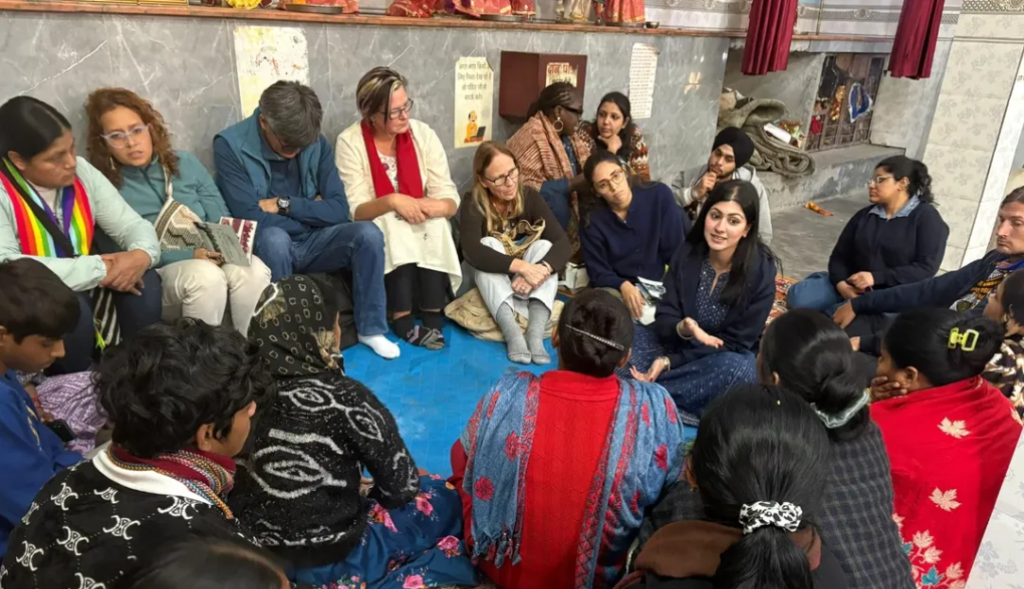
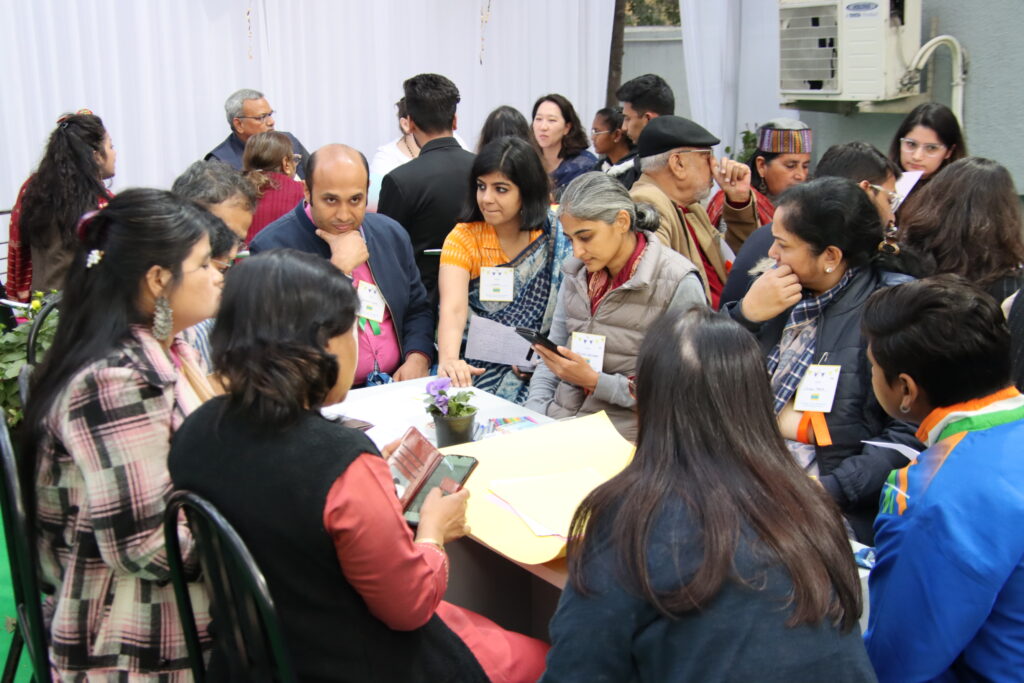
The engine of this process is the Action Learning Set: a high-trust, disciplined, typically group of four to eight people, called an Action Learning Set. The set meets regularly over a period of time.
During each session, one or more members bring a live challenge they are working on. The group does not jump to solutions. Instead, members ask questions: What have you tried? What are you assuming? What would change if that assumption were wrong?
This questioning process is central – it is how the person with the problem thinks more clearly and how the group learns collectively.
Between sessions, participants act on what they have learned by testing new approaches, gathering information, and making decisions. They bring the results back to the set, where the cycle of questioning, reflection, and action begins again.
A facilitator, sometimes called a set advisor, supports the process without directing the content.