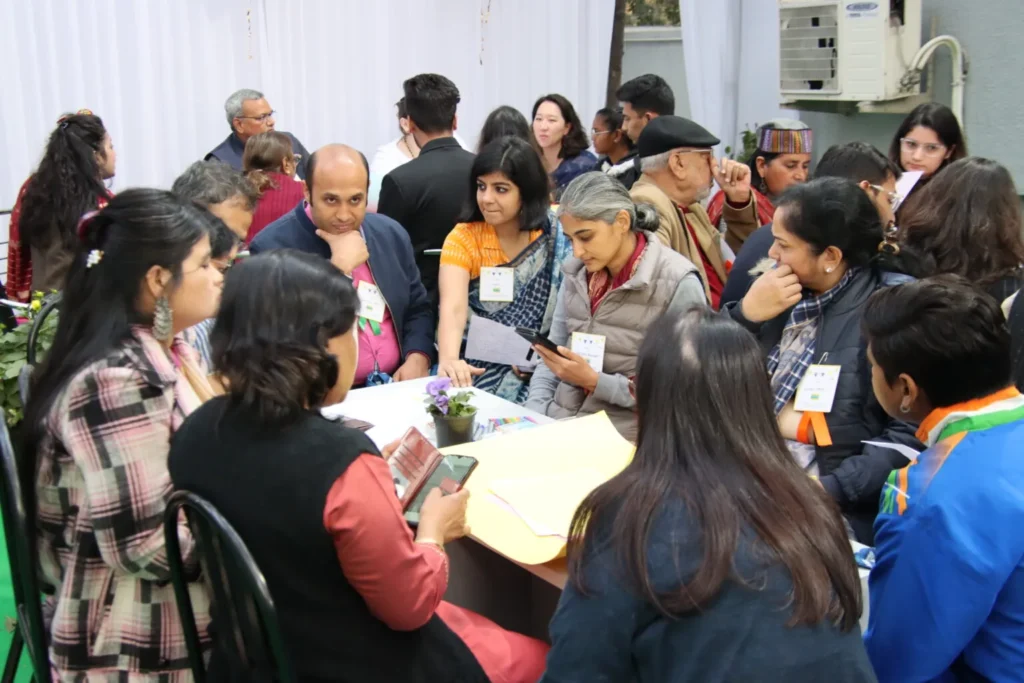
The traditional view of training positions the trainer or expert as the sole source of knowledge and the participants as passive recipients. However, modern pedagogy and decades of practice reveal a different perspective. Lasting learning happens when the expert shifts from being the authority on the stage to a facilitator. This shift is the essence of facilitation, and Society for Participatory Research in Asia (PRIA) has championed it rigorously.
PRIA and Participatory Training Methodology
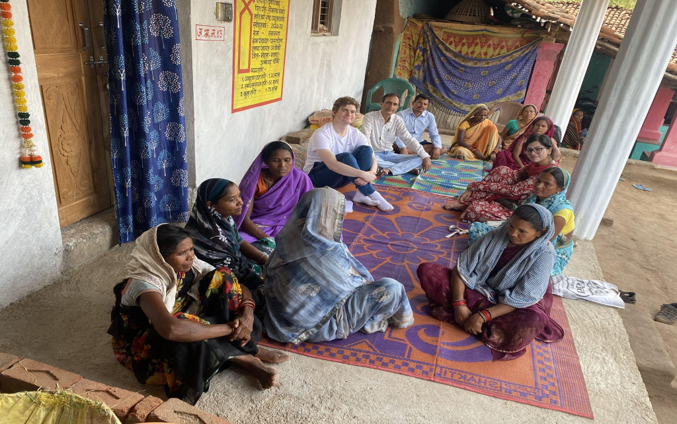
Established in 1982 in New Delhi, PRIA was founded on the conviction that communities are not passive recipients of external solutions, but the primary custodians of knowledge and agency.
This philosophy, rooted in participatory research and Paulo Freire’s tradition of popular education, inspired PRIA to pioneer the Participatory Training Methodology (PTM).
Over four decades, PRIA built a global network spanning over 3,000 NGOs across Asia and trained facilitators in 22 languages. The first Training of Trainers (ToT) on Participatory Training Methodology (PTM) was initiated by PRIA in the late 1980s, with the foundational manual published in 1986. PTM was not born in a classroom, it was forged through field practice, grounded in communities, and continuously refined by the people who used it.
From this work emerged Participatory Training Methodology (PTM), a structured, values-driven approach that treats learners as active co-producers of knowledge, not passive recipients of information. PTM draws on adult learning theory which includes behaviourism, cognitivism, and constructivism. It recognises that adults learn best when they connect new knowledge to prior experience, have a say in the process, and can see immediate relevance to their real-life challenges.
Hence, PTM is a structured approach to learning that starts with one foundational question: not “What do I need to teach?” but “What do participants already know, and how can we build on it together?”
More Reads: Why Participatory Research Tools Matter for Development Sector Professionals?
What Facilitating Learning Really Means
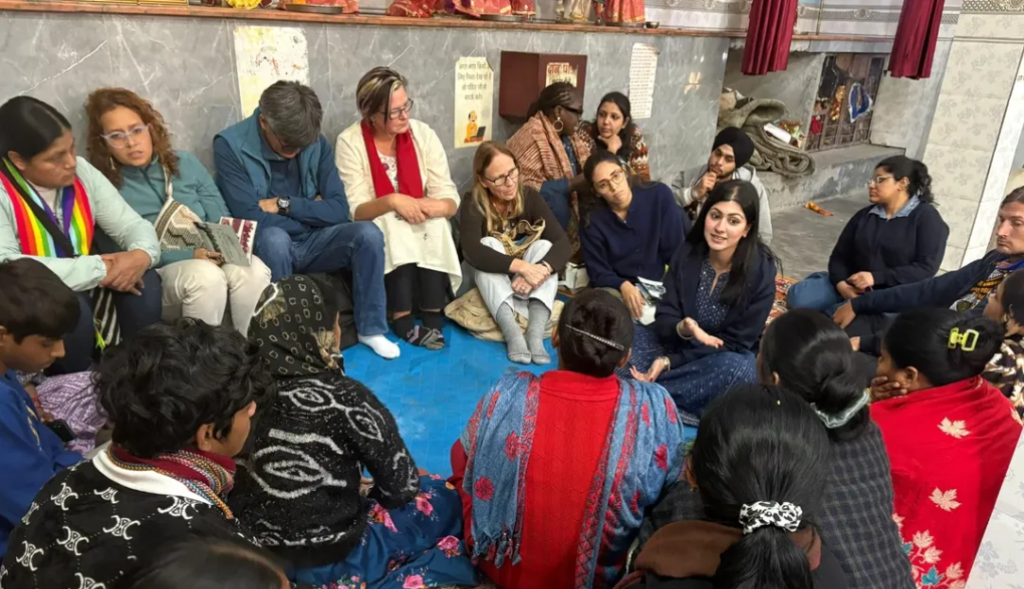
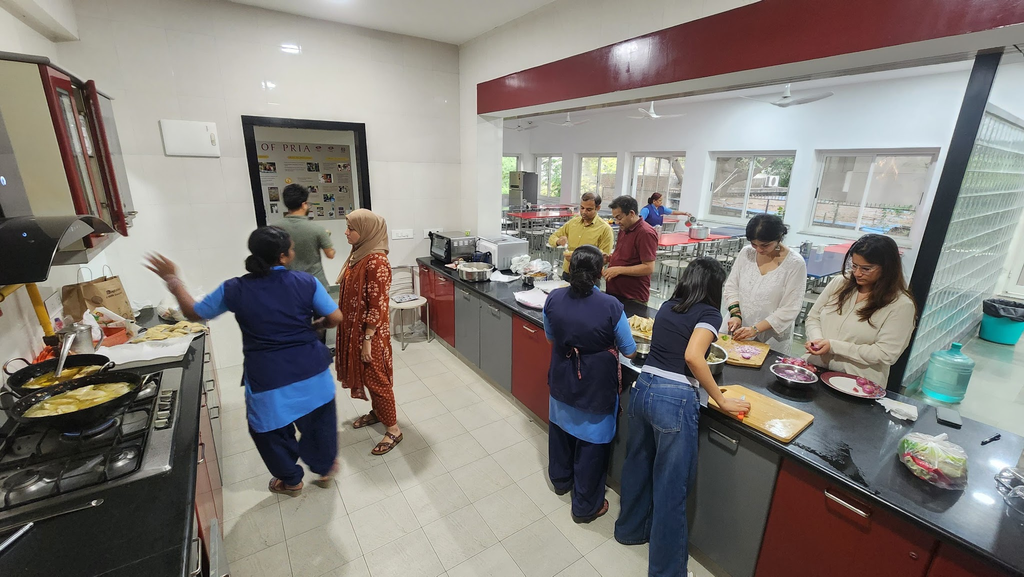
Facilitation is fundamentally different from instruction. In PTM, to facilitate learning means to create the conditions under which participants can construct knowledge themselves through experience, dialogue, and reflection. The facilitator is less concerned with delivering content and more concerned with designing the process through which participants arrive at their own understanding.
This process often follows the Experiential Learning Cycle, which means moving through planning, doing, and reflecting, so that participants connect lived experience with conceptual understanding. Three core shifts define this approach:
- Trainer-centred to participant-centred: the participants’ questions and experiences drive the session forward
- Passive transmission to active construction: participants engages with ideas, test them, and make them their own
- Abstract to contextual: learning is anchored in real-world situations and lived experiences
More Reads: PRIA’s Commitment to Gender Mainstreaming: Transforming Governance, Participation, and Everyday Realities
Why a Trainer Must Be a Good Facilitator
In PRIA’s PTM approach, a trainer is not merely an instructor but must also serve as a facilitator. Lasting learning happens when trainers design participatory processes, create psychological safety, and guide participants to construct knowledge through experience and reflection. Adults resist being lectured at, they engage when they feel heard, respected, and involved. A skilled facilitator harnesses the existing knowledge in the room rather than competing with it.
Facilitation also creates the psychological safety that genuine learning demands: the willingness to take intellectual risks, admit confusion, and challenge assumptions only emerges when participants feel safe. And crucially, learning that is experienced, discussed, and not merely heard.
How Teaching Facilitates Learning
Learning takes root when facilitators create experiences rather than simply deliver information.
They model how to think critically, explain the hidden steps behind expert practice, and build in moments for reflection through quick check-ins and summaries. The aim is not just to transfer knowledge but to help participants develop the skills to continue learning independently.
Facilitation is more than a set of techniques, it depends on the environment in which those techniques are applied. PRIA’s Participatory Training Methodology (PTM) offers a practical toolkit, but each method works only when paired with the right enabling condition. Together, the tools and factors form an integrated framework that makes learning participatory, relevant, and lasting:
- Experiential Learning Cycle (Plan–Do–Reflect) — Effective when learners feel psychologically safe to reflect
- Problem–Posing — Works best when linked to real-world relevance, so participants see the connection to their own challenges
- Question–Generating — Builds motivation when learners set the agenda by prioritising and justifying their own questions
- Structured Collaboration (I DO ARRT) — Relies on facilitator competence to guide roles, rules, and shared outcomes
- Personalised Learning — Strengthened by formative feedback, ensuring diverse learners refine understanding in real time
This integration shows that facilitation is not about isolated techniques. It is about weaving methods with conditions — motivation, competence, environment, feedback, and relevance — so that learning becomes a democratic practice rooted in everyday experience.
More Reads: Decentralisation in Government: Why Working with Local Institutions Matters
Conclusion
PRIA’s four-decade journey proves that the shift from teaching to facilitation is not a passing phase, it is the essential path for any learning practice committed to lasting impact. PTM gives trainers and educators a principled, practical framework for making that shift trust learners, design for experience, facilitate with humility, and remain curious about what a room full of people can discover together. The future of learning is participatory.