
Daily Archives: 7 April 2026

PRIA Approach to Participatory Training Methodology 

Learning Together: The PRIA Approach to Participatory Training Methodology 

The traditional view of training positions the trainer or expert as the sole source of knowledge and the participants as passive recipients. However, modern pedagogy and decades of practice reveal a different perspective. Lasting learning happens when the expert shifts from being the authority on the stage to a facilitator. This shift is the essence of facilitation, and Society for Participatory Research in Asia (PRIA) has championed it rigorously.  

PRIA and Participatory Training Methodology 

Established in 1982 in New Delhi, PRIA was founded on the conviction that communities are not passive recipients of external solutions, but the primary custodians of knowledge and agency. 

This philosophy, rooted in participatory research and Paulo Freire’s tradition of popular education, inspired PRIA to pioneer the Participatory Training Methodology (PTM). 

Over four decades, PRIA built a global network spanning over 3,000 NGOs across Asia and trained facilitators in 22 languages. The first Training of Trainers (ToT) on Participatory Training Methodology (PTM) was initiated by PRIA in the late 1980s, with the foundational manual published in 1986. PTM was not born in a classroom, it was forged through field practice, grounded in communities, and continuously refined by the people who used it.   

From this work emerged Participatory Training Methodology (PTM), a structured, values-driven approach that treats learners as active co-producers of knowledge, not passive recipients of information. PTM draws on adult learning theory which includes behaviourism, cognitivism, and constructivism. It recognises that adults learn best when they connect new knowledge to prior experience, have a say in the process, and can see immediate relevance to their real-life challenges. 

Hence, PTM is a structured approach to learning that starts with one foundational question: not “What do I need to teach?” but “What do participants already know, and how can we build on it together?” 

More Reads: Why Participatory Research Tools Matter for Development Sector Professionals?

What Facilitating Learning Really Means 

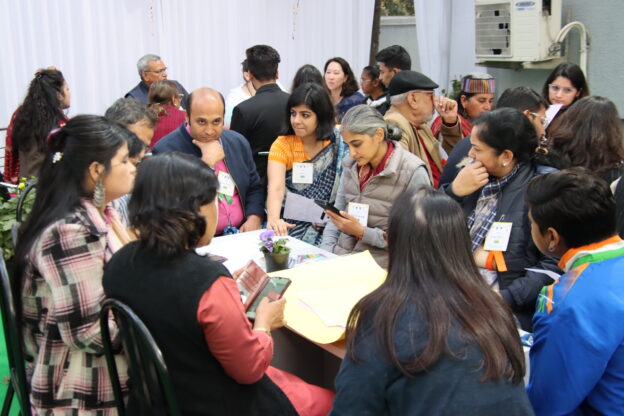
Facilitation is fundamentally different from instruction. In PTM, to facilitate learning means to create the conditions under which participants can construct knowledge themselves through experience, dialogue, and reflection. The facilitator is less concerned with delivering content and more concerned with designing the process through which participants arrive at their own understanding. 

This process often follows the Experiential Learning Cycle, which means moving through planning, doing, and reflecting, so that participants connect lived experience with conceptual understanding. Three core shifts define this approach: 

  • Trainer-centred to participant-centred: the participants’ questions and experiences drive the session forward
  • Passive transmission to active construction: participants engages with ideas, test them, and make them their own
  • Abstract to contextual: learning is anchored in real-world situations and lived experiences

More Reads: PRIA’s Commitment to Gender Mainstreaming: Transforming Governance, Participation, and Everyday Realities

Why a Trainer Must Be a Good Facilitator 

In PRIA’s PTM approach, a trainer is not merely an instructor but must also serve as a facilitator. Lasting learning happens when trainers design participatory processes, create psychological safety, and guide participants to construct knowledge through experience and reflection. Adults resist being lectured at, they engage when they feel heard, respected, and involved. A skilled facilitator harnesses the existing knowledge in the room rather than competing with it. 

Facilitation also creates the psychological safety that genuine learning demands: the willingness to take intellectual risks, admit confusion, and challenge assumptions only emerges when participants feel safe. And crucially, learning that is experienced, discussed, and not merely heard.   

How Teaching Facilitates Learning 

Learning takes root when facilitators create experiences rather than simply deliver information. 

They model how to think critically, explain the hidden steps behind expert practice, and build in moments for reflection through quick check-ins and summaries. The aim is not just to transfer knowledge but to help participants develop the skills to continue learning independently. 

Facilitation is more than a set of techniques, it depends on the environment in which those techniques are applied. PRIA’s Participatory Training Methodology (PTM) offers a practical toolkit, but each method works only when paired with the right enabling condition. Together, the tools and factors form an integrated framework that makes learning participatory, relevant, and lasting: 

  • Experiential Learning Cycle (Plan–Do–Reflect) — Effective when learners feel psychologically safe to reflect
  • ProblemPosing — Works best when linked to real-world relevance, so participants see the connection to their own challenges
  • QuestionGenerating — Builds motivation when learners set the agenda by prioritising and justifying their own questions 
  • Structured Collaboration (I DO ARRT) — Relies on facilitator competence to guide roles, rules, and shared outcomes 
  • Personalised Learning — Strengthened by formative feedback, ensuring diverse learners refine understanding in real time

This integration shows that facilitation is not about isolated techniques. It is about weaving methods with conditions — motivation, competence, environment, feedback, and relevance — so that learning becomes a democratic practice rooted in everyday experience. 

More Reads: Decentralisation in Government: Why Working with Local Institutions Matters

Conclusion 

PRIA’s four-decade journey proves that the shift from teaching to facilitation is not a passing phase, it is the essential path for any learning practice committed to lasting impact. PTM gives trainers and educators a principled, practical framework for making that shift trust learners, design for experience, facilitate with humility, and remain curious about what a room full of people can discover together. The future of learning is participatory. 
Decentralisation in Government: Why Working with Local Institutions Matters

India’s 73rd and 74th Constitutional Amendments marked a turning point in Indian democracy, granting constitutional status to rural (Panchayats) and urban (Municipalities) local self-governing bodies. This landmark reform embedded decentralisation at the heart of governance, creating the structural foundation for participatory democracy at the grassroots level. 

Since 1995, PRIA (Participatory Research in Asia) has worked extensively to strengthen Panchayati Raj Institutions (PRIs) across India, promoting decentralised governance and empowering marginalised groups. Over the decades, key milestones have included training more than 125,000 elected leaders to strengthen grassroots democracy, running voter awareness campaigns such as PEVAC​i to expand citizen participation, facilitating participatory planning processes that enable communities to set their own priorities, and advising governments on policy devolution to bring decision-making closer to the people. 

As PRIA’s decades of work have shown, decentralisation is not a one-time reform but a continuous process of democratic deepening — one that demands sustained investment in institutions, capacity building, and citizen engagement.  

What Decentralisation Means in Practice 

In formal terms, decentralisation refers to the redistribution of authority — transferring decision-making power, responsibility, and resources from central governments to local bodies. It streamlines operations by allowing those closest to daily tasks to make faster, more contextually informed decisions, increasing efficiency and responsiveness rather than relying on top-down directives. Political decentralisation transfers decision-making to elected representatives, administrative decentralisation delegates planning and implementation, and fiscal decentralisation ensures predictable revenue streams and expenditure autonomy. These dimensions must evolve together if local governance is to be meaningful. 

In practice, however, PRIA often encountered half-empty gram sabhas, under-staffed panchayat offices, and municipal councils nominally responsible for services but lacking real authority. Bridging this gap between constitutional promise and lived reality became central to PRIA’s mission

This challenge also surfaced in PRIA’s educational work. When developing online courses through the PRIA International Academy (PIA), a recurring pattern emerged: learners found it difficult to connect constitutional provisions with the realities of everyday governance. The courses were therefore deliberately designed to bridge theory and practice, making abstract principles accessible and directly relevant to participants’ lived contexts. 

More Reads: Why Participatory Research Tools Matter for Development Sector Professionals?

Centralisation vs. Decentralisation: Who is Accountable? 

The contrast between centralisation and decentralisation is often explained in terms of where decisions are made. But PRIA’s experience suggests a more useful question: who is accountable to whom, and through what mechanisms? In centralised systems, accountability flows upward to ministries and audit bodies. Decentralisation, by contrast, creates the possibility of accountability flowing downward to communities. Making this possibility real requires active construction — functioning gram sabhas, participatory planning, and evidence-based dialogue between citizens and officials. 

In developing the online course on ‘Working with Panchayats,’ PRIA examined the institutional backbone of decentralisation — District Planning Committees, State Election Commissions, and Finance Commissions. While these bodies were designed to safeguard local democracy, their performance has varied widely across states: Kerala’s functional DPCs stand in contrast to Madhya Pradesh’s dormant ones, and State Election Commissions often face political interference. By situating these institutions within participatory planning frameworks, the course was structured to help learners critically analyse both the successes and the challenges of decentralisation in practice.  

More Reads: Why Is PRIA’s Participatory Approach the Need of the Hour

Why Working with PRIs Matters 

PRIs are constitutionally mandated democratic institutions, but many representatives struggle to navigate planning procedures, financial rules, and accountability mechanisms. 

Recognising this, PRIA has consistently invested in Participatory Training Methodology (PTM), building systems of participatory planning and equipping leaders with the practical skills they need to govern effectively. 

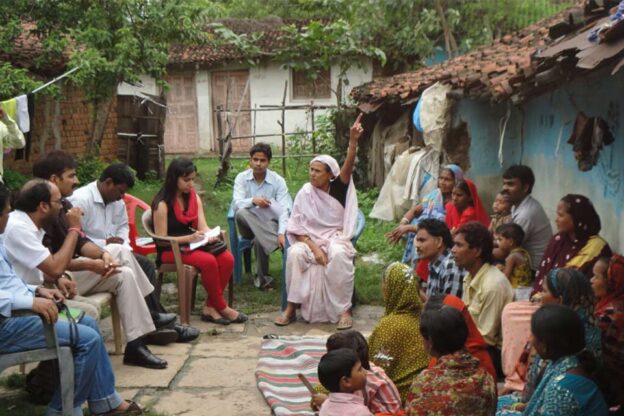
Through case studies incorporated into the courses, learners encounter decentralisation not as abstract policy but as lived practice. Learners resonated most with stories where citizen participation directly shaped outcomes — whether through women’s active presence in Gram Sabhas or Panchayats exercising fiscal autonomy to design locally relevant projects. 

The Advantages of Decentralisation 

When decentralisation works as intended, its advantages are distinct and significant: 

  • Local bodies are uniquely positioned to understand infrastructure gaps, seasonal service demands, and social hierarchies — making governance more responsive to those actually affected
  • Accountability deepens when citizens have both the knowledge and the channels to engage meaningfully with local government
  • Resource utilisation improves when planning authority is matched with contextual understanding and community ownership

Yet, as PRIA’s work has consistently shown, none of these advantages emerge automatically. They must be cultivated through training, peer learning, participatory audits, and structured dialogue. Decentralisation is not simply a technical reform, it is a democratic practice rooted in everyday life. 

More Reads: PRIA’s Commitment to Gender Mainstreaming: Transforming Governance, Participation, and Everyday Realities

Conclusion: Decentralisation as Democratic Deepening 

Decentralisation is ultimately about cultivating democratic practices that bring governance closer to people’s everyday lives. When local institutions are equipped to plan, manage resources, and engage citizens meaningfully, democracy becomes more responsive, transparent, and inclusive. The real test lies in whether citizens can see their voices reflected in village assemblies, ward committees, and municipal councils. 

Through the PRIA International Academy, practice-based courses continue to nurture this vision — helping elected leaders, officials, and civil society practitioners translate constitutional mandates into lived realities. PRIA’s long-standing commitment reminds us that decentralisation is best understood not as a reform completed, but as a democracy continuously renewed through citizen participation and institutional strengthening. 

PEVAC stands for Pre‑Election Voter Awareness Campaign. It was initiated by PRIA to strengthen citizen participation in local governance, especially around Panchayat elections after the 73rd Constitutional Amendment in India. 

Kerala Institute of Local Administration (KILA): 25th Year of People’s Plan Campaign in Kerala Local Governments – documents how DPCs consolidate Gram Panchayat and municipal plans into district strategies, supported by citizen participation and technical committees 

Press Information Bureau (PIB): Explains how DPCs in many states, including Madhya Pradesh, were constituted mainly to meet central funding requirements under the Backward Regions Grant Fund (BRGF), but remained weak in practice.