Whose knowledge is considered legitimate? What is understood as development and who gets to shape it? What strengthens democracies and what weakens them? How do we move toward futures that are just, sustainable and egalitarian while addressing the deep inequalities of the present? The work of PRIA began with a set of fundamental questions. As the world has changed and continues to change, those questions have only become more urgent.
These questions shape the everyday realities of governance, citizenship and social transformation. For over 44 years, PRIA’s journey has been guided by the conviction that development cannot be designed for people without being shaped by them. Participation is not an afterthought. It is foundational.
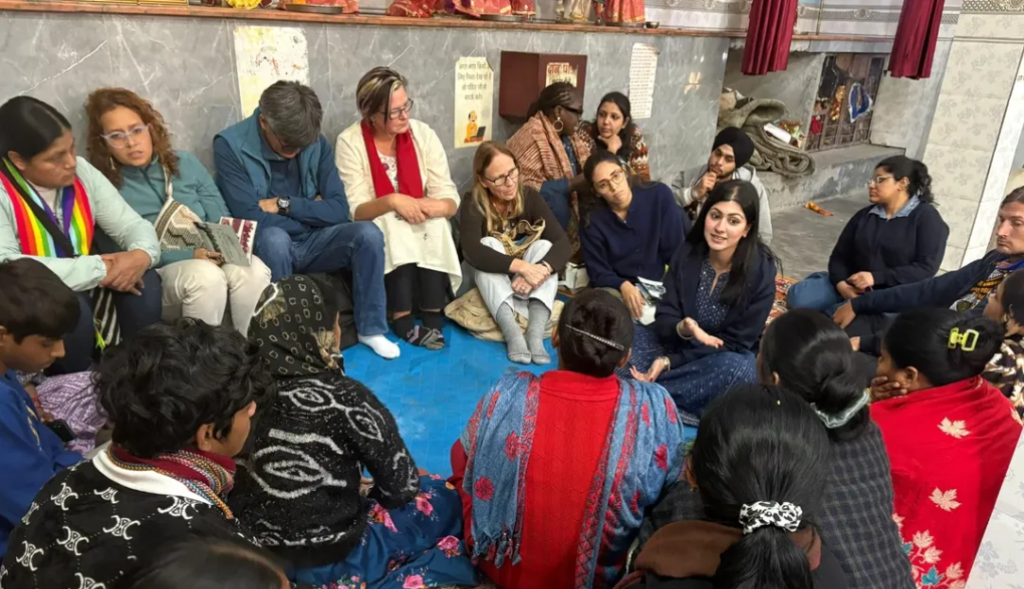
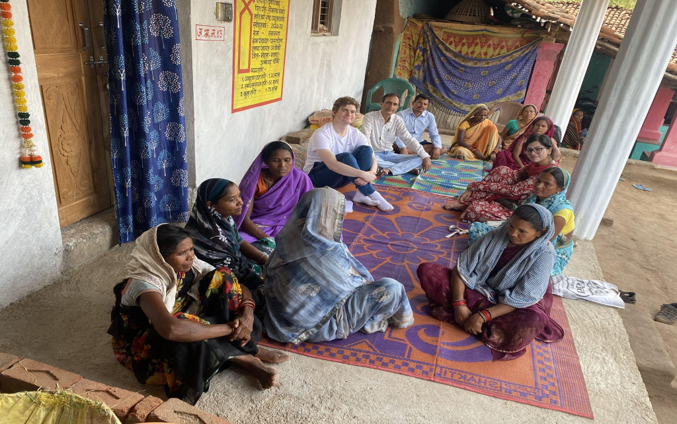
Across urban local governance, adult education, women’s political participation, climate justice and decentralised planning, PRIA has worked alongside communities to shape priorities, generate knowledge and guide social action. Participation has been practised as sustained dialogue, reflection and shared decision making. Over time, this has built a grounded body of practice in community-based participatory research, drawing from lived experiences to inform pathways toward social transformation. What began as field practice has evolved into systematised research and training methodologies, now accessible through structured courses and learning modules.
Through more than 300 collaborative projects, PRIA has often played a bridging role. Citizens require information and skills to articulate their rights and responsibilities. Institutions of governance, private actors delivering basic services, and academic institutions that influence knowledge systems must build the capacity to listen, respond and act in accountable ways. As development unfolds across interconnected spheres of state, market, civil society and knowledge institutions, participation becomes meaningful when empowered citizens engage responsive systems across sectors.
More Reads: Why Participatory Research Tools Matter for Development Sector Professionals?
Bridging Citizens, Institutions and Systems
PRIA’s long-standing work in local governance illustrates this bridging role across rural and urban contexts. In rural India, engagement with Panchayati Raj Institutions has strengthened participatory village planning and leadership capacities of elected representatives. In urban contexts, PRIA has worked with Urban Local Bodies to enhance participatory planning, social accountability and citizen engagement in basic service delivery. These experiences have informed structured courses and training programmes on participatory research and local governance offered through PRIA International Academy.
These experiences also show that local governance does not operate in isolation. With changing socio-economic structures, the private sector’s role in delivering basic services has expanded, making accountability, transparency and public responsibility wider and more complex. PRIA has responded by engaging with private actors, building sensitivity to realities of inequality and encouraging practices grounded in dialogue and responsibility. Development unfolds within interconnected systems of state, market and civil society, and strengthening participation across these systems requires long-term investment in capacity building.
More Reads: PRIA’s Commitment to Gender Mainstreaming
Building Capacities for Participatory Development
Capacity building has been central to PRIA’s work from the outset. In 1982, the Participatory Training Methodology was developed to strengthen human and institutional capacities through dialogue and reflection. Training of Trainers workshops deepened this approach by enabling grassroots organisers and activists to engage in critical self-reflection while strengthening their facilitation and organising skills. Over time, these methodologies have been adopted by civil society organisations, higher education institutions and development practitioners across contexts.
As social realities evolved, so did the focus of capacity building. From strengthening grassroots activists and Panchayati Raj Institutions to initiatives such as CAPSTONE for emerging non-profits and Youth-n-Democracy for nurturing active citizenship amongst the youth, PRIA has continually responded to changing needs. These engagements have informed participatory monitoring and evaluation, organisational development and institutional strengthening efforts.
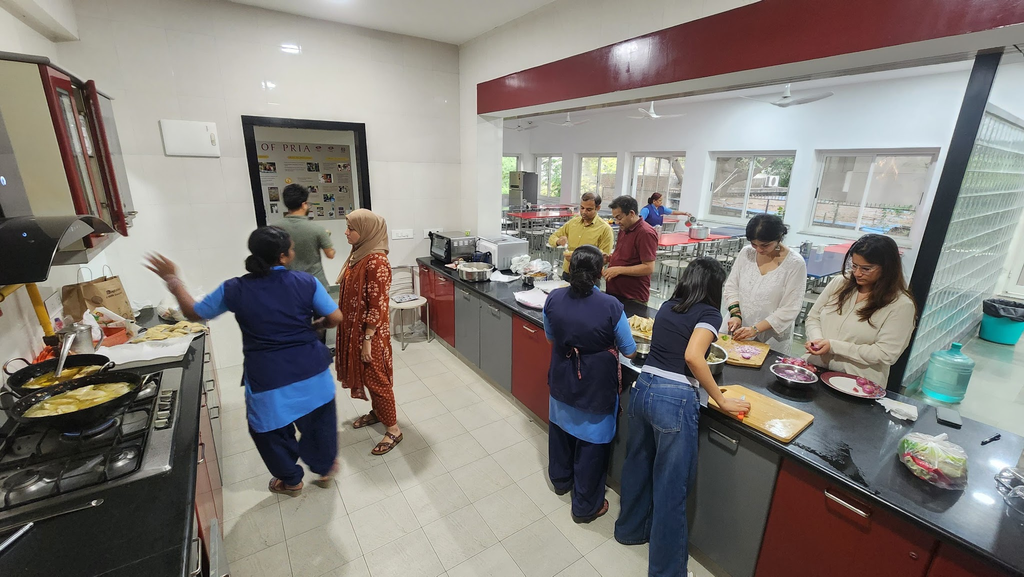
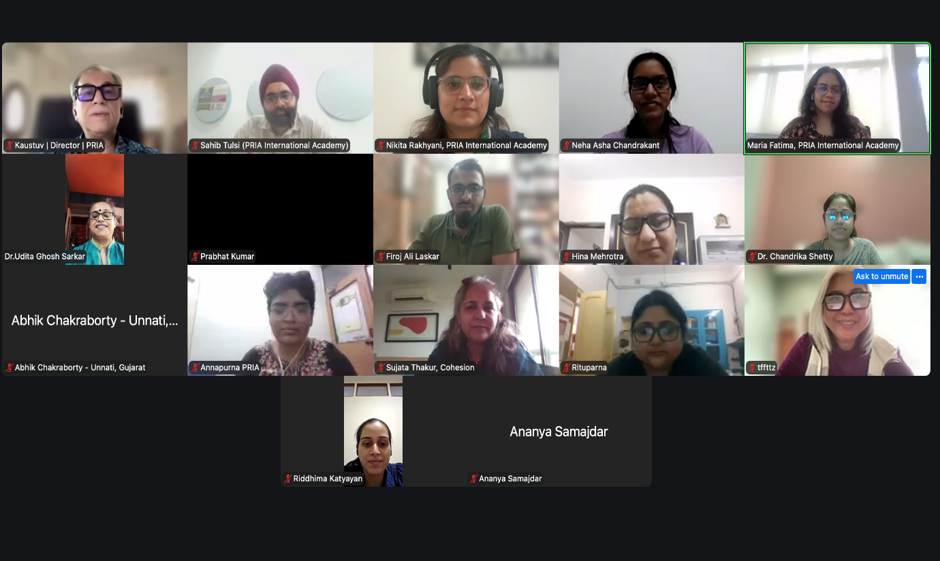
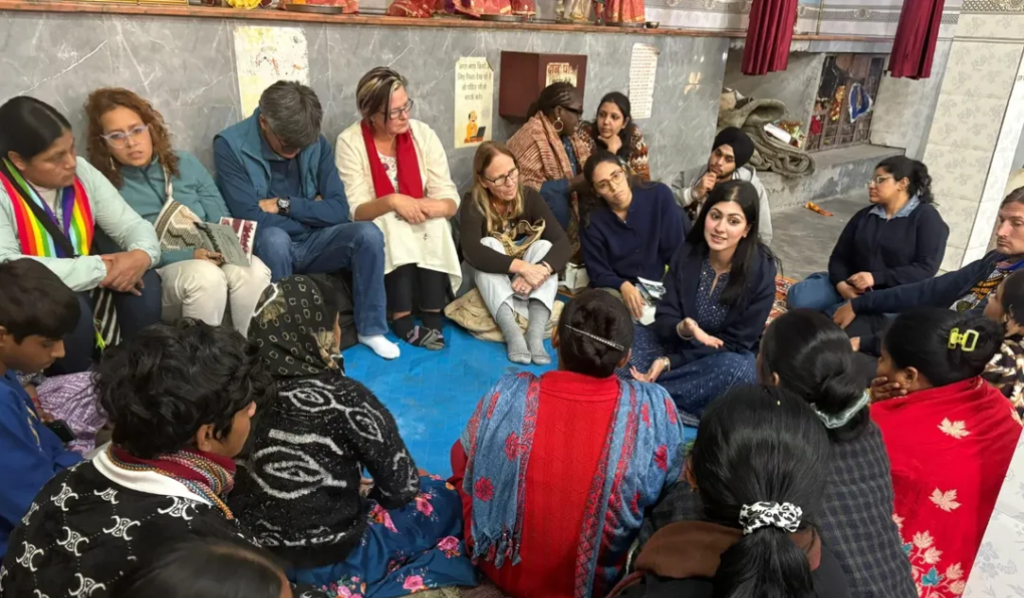
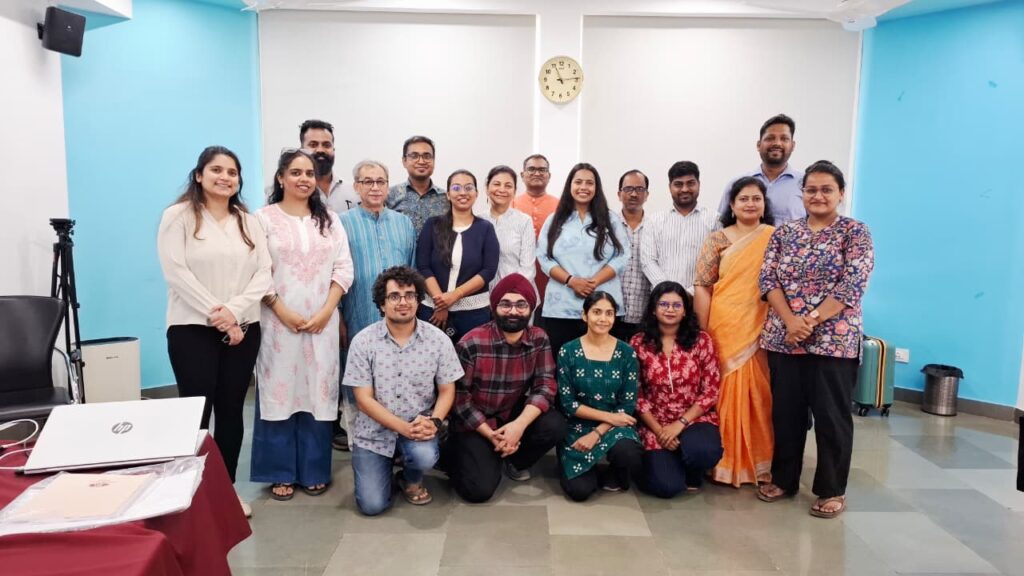
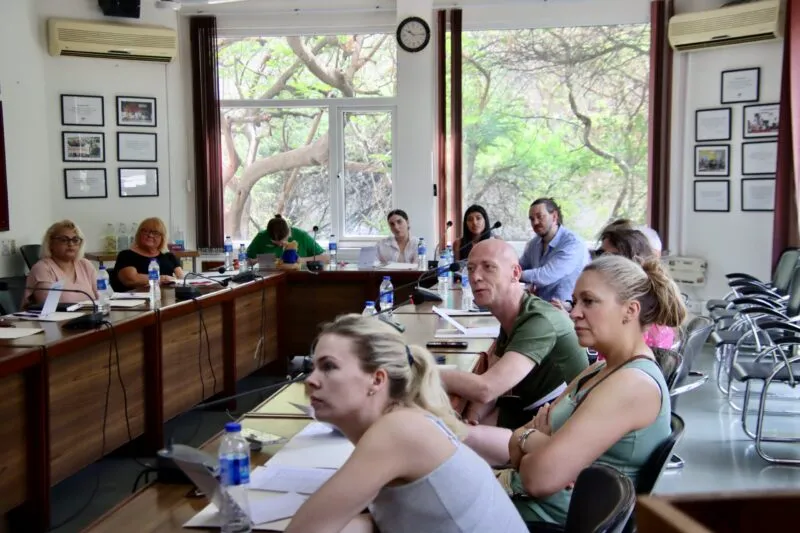
These decades of practice are consolidated within PRIA International Academy. The Academy translates field experience into structured learning through courses and workshops on participatory research, governance, monitoring and evaluation and gender. Learning extends beyond conventional classrooms. Arts based methodologies, learning circles, safety audits and facilitated dialogues create reflective spaces for engagement. Higher Education Institution visits bring students and faculty into immersive contexts that bridge theory and lived realities.
More Reads: Reflections from an Arts-Based Learning Circle at PRIA, India
Why does this matter now?
We are living through widening inequalities, ecological crisis and democratic strain. Technical solutions alone are not enough. Participatory development is not merely a methodology but an ethical orientation toward accountable institutions and active citizenship. It calls for the capacity to facilitate dialogue across difference, strengthen leadership among marginalised sections and hold systems accountable in meaningful ways.
The need for such capacities is growing. As societies navigate digital participation, climate vulnerability, gender justice and rapid urban transformation, resilience depends on informed and engaged citizens capable of collective action.
PRIA’s work shows that participatory processes can be practised and institutionalised over time, and that knowledge emerging from communities can guide social action. For those seeking to deepen this practice, the courses and workshops offered through PRIA International Academy provide structured learning pathways grounded in decades of experience. The questions that shaped PRIA’s founding remain alive. Who shapes development? Whose knowledge counts? How do we build just and sustainable futures? Engaging with these questions is the need of the hour.