Across development practice, programmes often begin with ambitious goals – reducing poverty, improving health outcomes, strengthening local governance. Yet, in many cases, the change envisioned at the outset does not fully materialise over time.
What is often missing is not intent, but a clearly articulated pathway that connects actions to outcomes within the lived realities of communities.
This is where a well-developed theory of change framework becomes particularly helpful – not as a statistic framework but as a way of thinking through how change unfolds in practice.
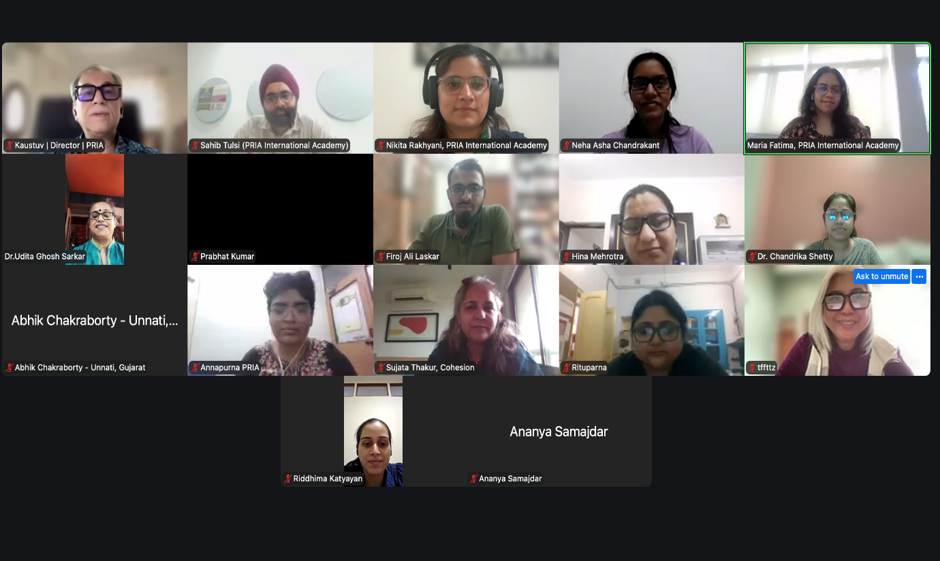
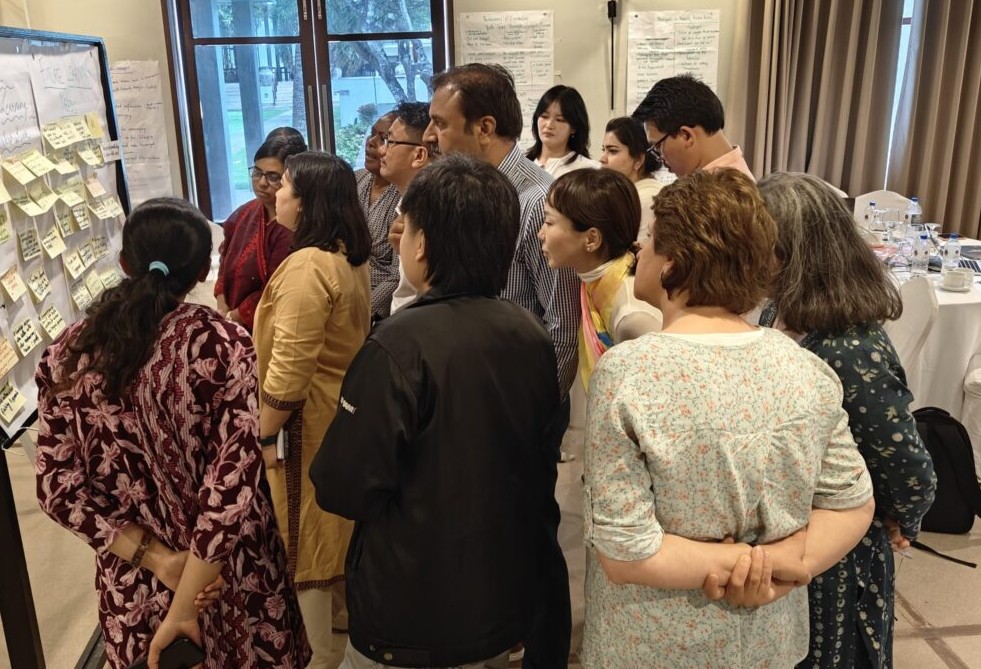
PRIA International Academy’s two-day workshop on Using Theory of Change for Greater Impact is designed to bring that on-ground understanding into a structured learning environment, equipping practitioners to build and apply their own theory of change.
Understanding the Starting Point
Applying the theory of change framework begins with understanding what is actually happening in a community. Across development practice, this often means looking at existing challenges, social dynamics, and institutional structures.
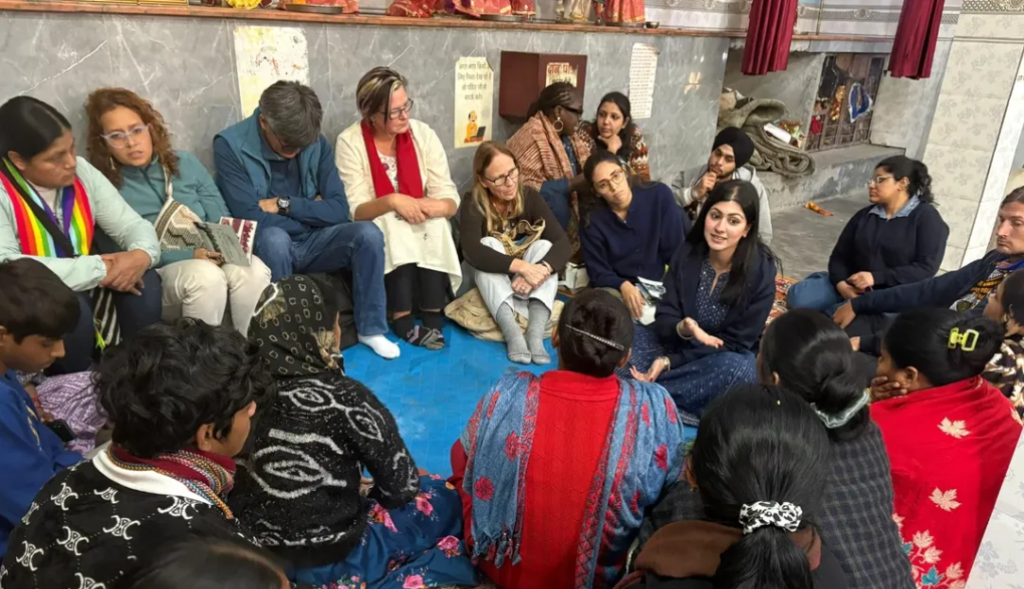
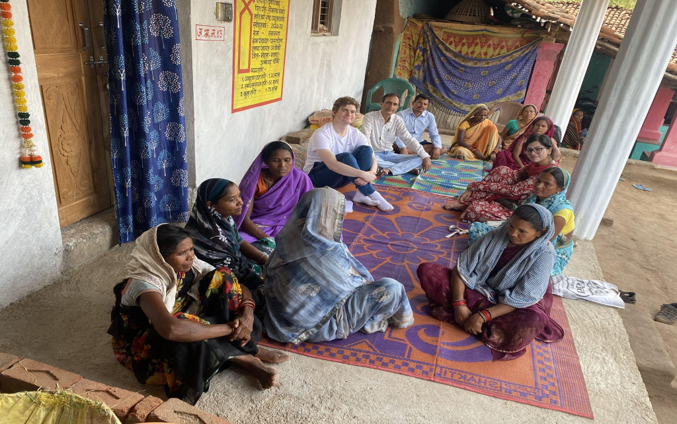
This understanding comes from engaging directly with community members through conversations, field visits, and local discussions, where their lived experiences help shape how the problem is seen.
More Reads: Learning Together: The PRIA Approach to Participatory Training Methodology
Identifying Development Issues Through Participation
Once this initial understanding begins to take shape, it becomes clearer that what appears as a single issue is rarely straightforward. Engaging with communities helps to identify what truly needs attention, instead of just surface-level observations.
For instance, school dropout rates in rural areas may initially be understood as an issue of access to education, but conversations often reveal connections to income pressures, migration, and social norms that point to a more grounded understanding of the issue.
More Reads: PRIA’s Commitment to Gender Mainstreaming
Co-creating Pathways of Change with Communities
As the underlying issues become clearer, the focus shifts towards exploring how change can happen. Developing pathways of change becomes a shared process, where communities and practitioners work together to find possible solutions.
A practical theory of change example can be seen in education, where improving learning is rarely about building schools; issues like transportation, teacher availability, and household awareness often become equally important through dialogue.
Designing Interventions Based on Local Realities
Experience across development practice consistently shows that rigid traditional approaches are not able to address today’s dynamic realities effectively. Programmes are far more effective when they are aligned with the social, cultural, and economic realities of the communities they seek to engage.
Designing context-driven and grounded interventions not only improves feasibility but also strengthens their relevance in practice.
Aligning Programs with Desired Social Outcomes
As these interventions take shape, the theory of change framework helps explain how different actions contribute to broader outcomes over time. Rather than viewing activities in isolation, it becomes important to understand how each intervention fits within a sequence of changes over time.
At this stage, it becomes important to think about what change would really look like in that context. This means being clear about the outcomes, while staying flexible as the work unfolds and new learning emerges.
More Reads: Reflections from an Arts-Based Learning Circle at PRIA, India
Integrating with Governance and Institutional Systems
However, community-level change rarely occurs in isolation. In most cases, it is shaped by governance and institutional systems that people interact with in their daily lives.
This aligns with the evolutionary theory of social change, where transformation happens gradually through systems and structures rather than isolated efforts.
PRIA’s long engagement with local governance processes, including the Panchayati Raj system, has shown that change is more sustainable when it is embedded within these structures rather than operating in parallel to them.
Conclusion
Applying a Theory of Change is not a one-time exercise – it is an ongoing, participatory process that evolves over time.
It begins with understanding the on-ground reality and evolves into a structured yet flexible approach to change.
Its strength lies in linking community voice with institutional action, ensuring that development efforts remain grounded, responsive, and sustainable.
For practitioners ready to develop this capacity in practice, PRIA International Academy’s workshop on Using Theory of Change for Greater Impact offers the frameworks, tools, and field-grounded learning to begin.