In my last blog, I wrote about my journey from being a theory-obsessed sociology student to discovering community-based participatory research (CBPR) and the idea of knowledge democracy. It was a story of unlearning some of what higher education had taught me about who produces knowledge, whose knowledge counts, and what research is ultimately for. But when this academic, who had done a little bit of unlearning and a little bit of learning, finally got the opportunity to go to the field, I could not help but feel nervous.
For most of my academic life, going into the field had always been tied to a familiar objective. This time, however, my mission was to encounter forms of knowledge that I would never have had the opportunity to study in four years of higher education.
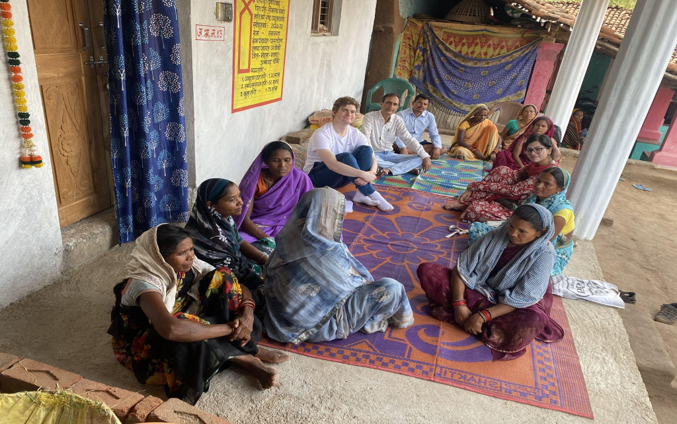
That opportunity took me to Poshina, Gujarat, where I learnt from the climate practices and experiences of the Bhil communities. The visit sought to understand climate resilience through the lived experiences, observations, and practices of the communities most directly affected by environmental change.
A Refresher in Knowledge Democracy
Fortunately, just a day before leaving, I had a deadline to submit a working paper for the DECODE Knowledge Project.
It became exactly the refresher course I needed. As I worked through the paper, I revisited discussions on ecologies of knowledge, epistemicide, and knowledge democracy – ideas that challenge the dominance of a single way of knowing, recognise the loss of other knowledge systems due to colonisation, and call for valuing diverse forms of knowledge equally. For example, instead of treating a scientist’s understanding of climate change as inherently more valuable than an Adivasi person’s knowledge about local ecosystems, these ideas ask us to value them equally. It also refreshed my understanding of CBPR methodologies in climate research, where communities are partners in shaping both the research process and the knowledge it produces. It reminded me that knowledge is produced not only in universities, laboratories, conferences, and policy institutions, but also in farms, forests, villages, kitchens, community meetings, and everyday practices. I was excited that I would finally get to witness this in practice.
More importantly, it reminded me that recognising these forms of knowledge is not about rejecting scientific or academic knowledge. Rather, it is about understanding that no single system of knowledge can fully explain complex realities of climate change and adaptation. My training in CBPR, through… had taught me to take lived experience seriously and place it in conversation with other forms of knowledge rather than treating it as secondary.
CBPR had also taught me that rigour and humility are not opposites. Its methods remain systematic, reflective, and academically rigorous while asking researchers to approach communities not as sites of extraction but as partners in co-creating knowledge.
None of these ideas were new to me. I had spent months reading about them. But as I packed my bags for Gujarat, I realised that reading about knowledge diversity and witnessing it were two very different things.
For the first time, I entered a research space without the comfort of believing I already knew what I was looking for. I was not there to collect evidence for an argument I had already formed. I was there to listen, observe, learn, and remain open to the possibility that the most valuable insights would be the ones I had not anticipated.
Arriving in Poshina
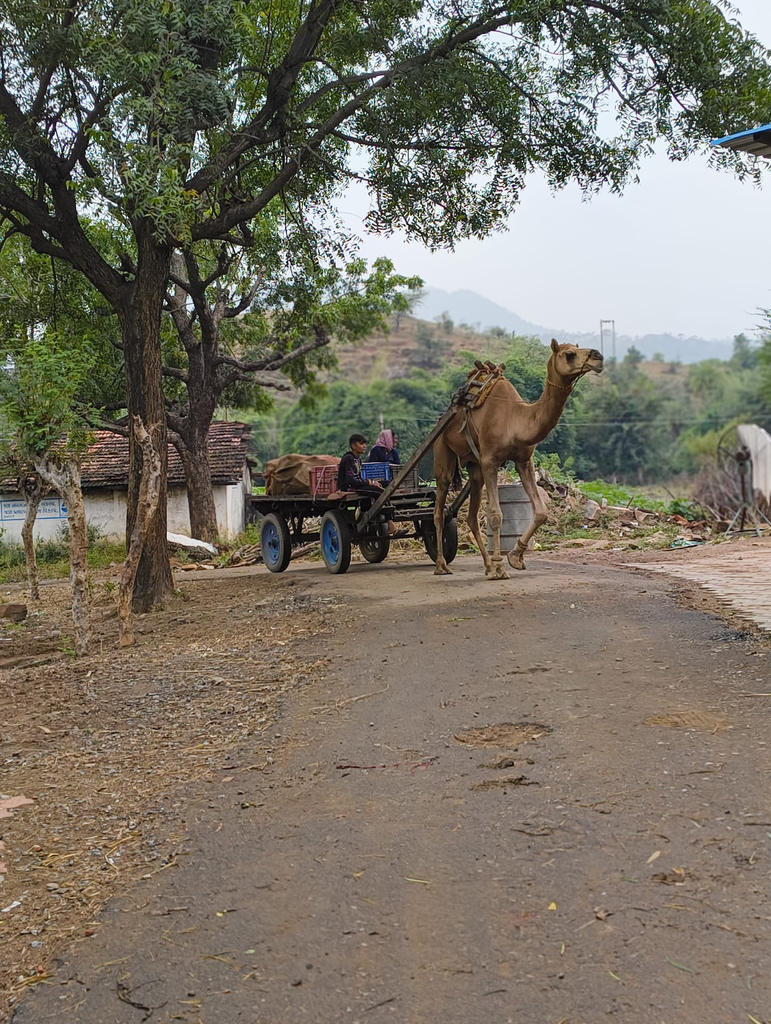
Interestingly, Poshina, a hilly region of Gujarat bordering Rajasthan, reminded me in unexpected ways of my time in the United Kingdom. Not because the two places were particularly alike, but because some details felt strangely familiar: tree-lined roads, bus stops, cows in unexpected places, and relentless rain. I was later told that this weather was far from typical and was itself a sign of a changing climate, creating havoc for cotton farmers in the area.
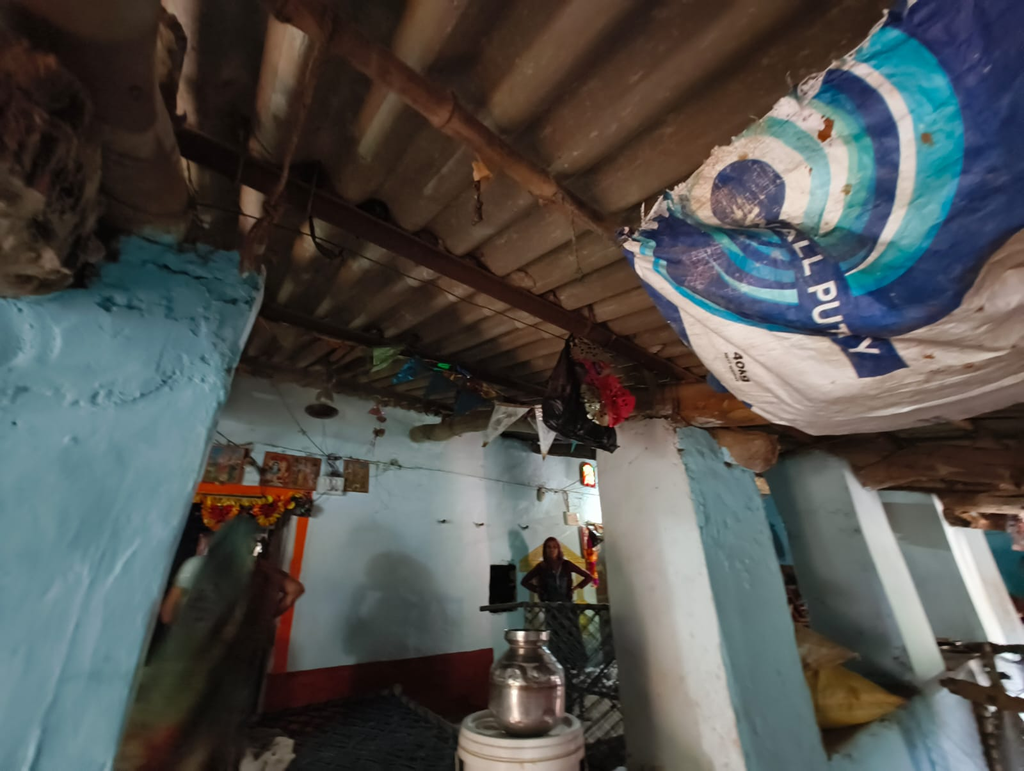
The differences however, were impossible to ignore. Many houses, often separated by considerable distances, were either kuchha or only partially constructed. I was told that delays and corruption had prevented several government housing projects from being completed.
Although the region is relatively remote, the roadsides were lined with discarded chips packets and biscuit wrappers, a quiet reminder that environmental degradation rarely recognises the boundaries between urban and rural spaces.
Over the next few days, I travelled across Poshina on the back of a motorcycle through winding hills in relentless rain. The cold was biting, and each raindrop hitting my face felt like a tiny needle. It was not the fieldwork experience I had imagined. But the people made the field feel like home. Every conversation, every household that welcomed us in, and every story generously shared, reminded me why I had wanted to come in the first place.
Introduced as the Learner, Not the Researcher
I could not have asked for better facilitators than the staff of our partner organisation, all of whom belonged to Poshina and had chosen to work for their own communities. Looking back, they did the smartest thing in the beginning of every interaction by introducing me, not as the researcher or expert, but as the learner. They told people that they were the knowledge holders in this conversation and that I had come to learn from them.
That simple shift transformed every conversation and my role within it. CBPR is built on the understanding that learning does not flow in only one direction. While I had come to learn from the community, I also found myself sharing my own experiences and perspectives whenever they were useful. Research is at its most meaningful not when knowledge flows in a single direction but when both leave having learnt something they did not know before.

Stories of Strength, Not Just Problems
I was later told that many research conversations people had participated in usually began with questions about problems: What difficulties do you face? What is not working? What do you need? Ours began differently. Instead of telling me what they lacked, people began by showing me what they had.
They welcomed me into their homes and shared the knowledge embedded in their everyday lives. They showed me climate-resilient homes built from bamboo and locally available materials. The concrete houses constructed under government schemes were far less suited to the local climate, becoming unbearably hot during summer and cold during winter, while traditional homes remained naturally regulated. One family also showed me a shelf built close to the roof where cooler air naturally collected, allowing it to function as a refrigerator.
Perhaps I had unconsciously assumed that the outcome of good fieldwork would be a long list of problems. Instead, I came back with stories of strengths. Don’t get me wrong- I still learnt about alcohol smuggling, challenges in education and healthcare, climate change, child labour, corruption, and the many forms of marginalisation that shape everyday life in the region. Those realities remained very real.
But alongside them, I encountered resilience, hope, and knowledge produced, tested, and refined through generations of living with the land. I witnessed community, collective problem-solving, and the remarkable potential of young people when they are trusted and empowered.
The Biggest Lesson
The biggest lesson I returned with was that- conversation between academic knowledge and lived knowledge is far more productive than the false choice between them. The communities of Poshina possessed an extraordinary amount of knowledge. What they often lacked was a governance system capable of recognising, supporting, and delivering services that responded to their realities.
Similarly, what many young people needed was not simply an opportunity to leave for cities for a “better life”, but opportunities to build upon the knowledge, skills, and strengths that already existed within their communities.
For years, I had thought that the purpose of fieldwork was to identify problems waiting to be solved. The communities of Poshina reminded me that it is equally about recognising strengths, understanding the knowledge that already exists, and asking what prevents that knowledge from being valued.
The question is not whether communities possess knowledge. It is whether we, as researchers, are willing to create the conditions in which that knowledge is recognised, respected, and placed in conversation with other ways of knowing.
The people of Poshina did not need someone from outside to teach them how to protect their forests, adapt to a changing climate, or live sustainably. If anything, people like me needed to go there and learn how they had been doing it all along.
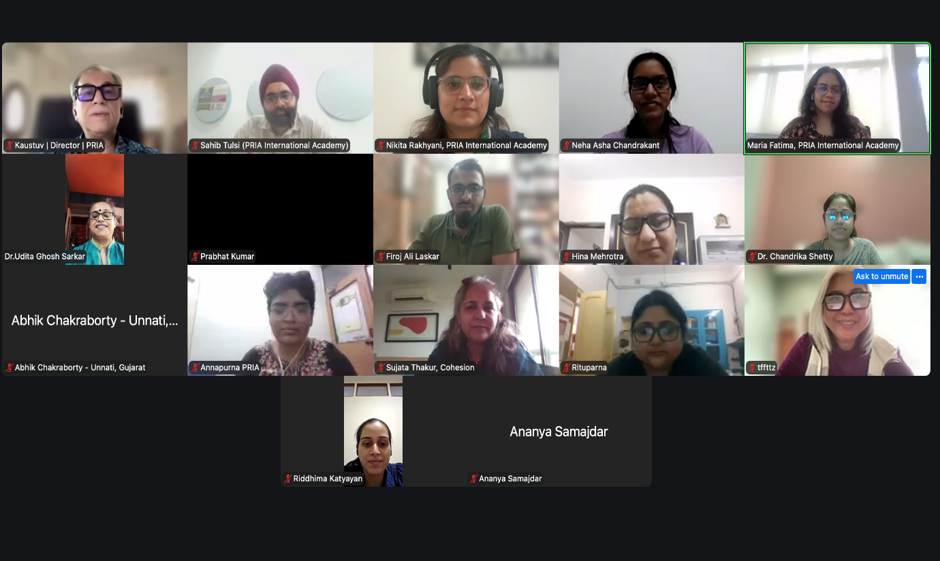
If we are serious about addressing complex social and environmental challenges, we need researchers who are equipped not only with technical methods, but also with the ability to work alongside communities in ways that are rigorous, participatory, and grounded in mutual learning. It is precisely this approach that PRIA International Academy’s CBPR courses seek to build.