My earliest imagination of what the inner workings of a workplace looked like came from sneaking into my father’s office as a child and wandering around the place for the rest of the day. My hobby required a carefully planned strategy. Go with him in the very early hours of the morning and avoid talking to, or being spotted by, anyone I had not already met. My first opponent to hide from was the woman who brought my father his morning tea. Then came his boss, who always seemed to complain about how slowly she worked. I was confused. She seemed to be working more than anyone else on that floor. Everyone else was sitting in front of laptops, and at that age I thought laptops were just video game devices.
After my second visit, I asked my father a question that had been bothering me. Why are the aunties not sitting on your floor? Where are they? What do they do? He told me they also worked in the office but did not sit with his team. Some of them gave him work while others supported him in doing his work. His answer, however, led to another question. If they worked here too, why were they somewhere else?
As I grew up, I found similar arrangements elsewhere. Men teachers and women teachers sat in different spaces in my school staff room. There were very few women on the election posters around my bus stop. Almost every bus driver I saw was a man, while it was overwhelmingly mothers who brought children to the bus stop every morning. I began to realise that the ordinary often concealed unequal ways of organising work, authority and everyday life.
More Reads: PRIA’s Commitment to Gender Mainstreaming: Transforming Governance, Participation, and Everyday Realities
The Question My History Teacher Asked
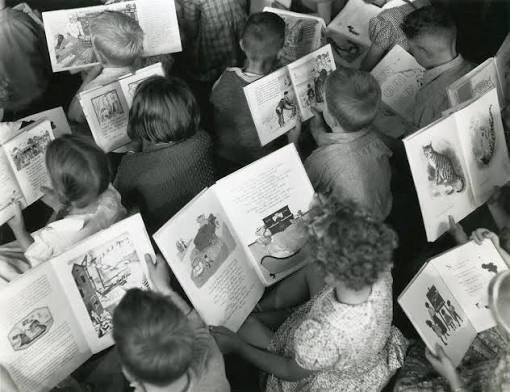
My history teacher in Class 9 fuelled this curiosity even further. She was teaching us about voting rights after the French Revolution, when estate-based voting was replaced by individual voting. After we finished reading the textbook, she asked, “Did everyone have voting rights in France?”
Most of us answered yes. I assumed that “all propertied and tax- paying men” meant everyone. Then she paused and asked again, “Did it really include everyone?” That hesitation created space for another question.
I raised my hand and asked, “Where are the women? What about the non-propertied men?”
What Gender Mainstreaming Really Means
Looking back, I realise that I was asking questions about the gendered division of labour and political participation long before I knew those phrases existed. I noticed that work was organised differently for women, but I did not yet have the language to understand why. Gender mainstreaming perhaps begins from this simple act of noticing. It asks us to question arrangements that appear natural and to examine how institutions produce unequal experiences for different people.
When I later studied gender and began working in this field, I found myself returning to that moment repeatedly because my teacher had done something much more important than correcting a history lesson. She interrupted what all of us, including the textbook, had accepted as obvious by asking whether “everyone” really meant everyone. She questioned the “normal”. Gender mainstreaming, to me, feels like a similar intervention. It is not simply about bringing more women or gender minorities into existing institutions. It is about questioning the assumptions through which those institutions have been built. It asks whose experiences are treated as the norm, whose concerns are considered important, and whose absence has become so ordinary that it is no longer noticed.
Why This Matters for Organisations
This becomes even more important when we think about organisations and workplaces. The questions I asked as a child about where the women employees were, why they sat separately, or what work they did cannot be answered through a technical checklist. They are rooted in longer histories of how work itself has been organised, how productive and reproductive labour came to be separated, and whose labour came to be recognised as skilled and productive while other forms of work remained invisible.
Representation matters, but it is only one part of a much larger process. Gender mainstreaming asks institutions to examine how decisions are made, who participates in making them, whose experiences inform policies and programmes, and whether seemingly neutral practices reproduce unequal outcomes. It requires us to move beyond asking whether women and gender minorities are present towards asking whether the systems themselves continue to privilege certain experiences.
Gender justice is the goal. Gender mainstreaming is the strategy through which institutions work towards that goal. It asks organisations to use a gender lens in all their activities instead of treating gender as a separate concern. It is a continuous process of questioning institutional cultures, everyday practices and decision-making so that inequality is not reproduced.
Learning to ask these questions is only the first step. They must then become part of how organisations work and reflect on their own practices.
What This Looks Like at PRIA
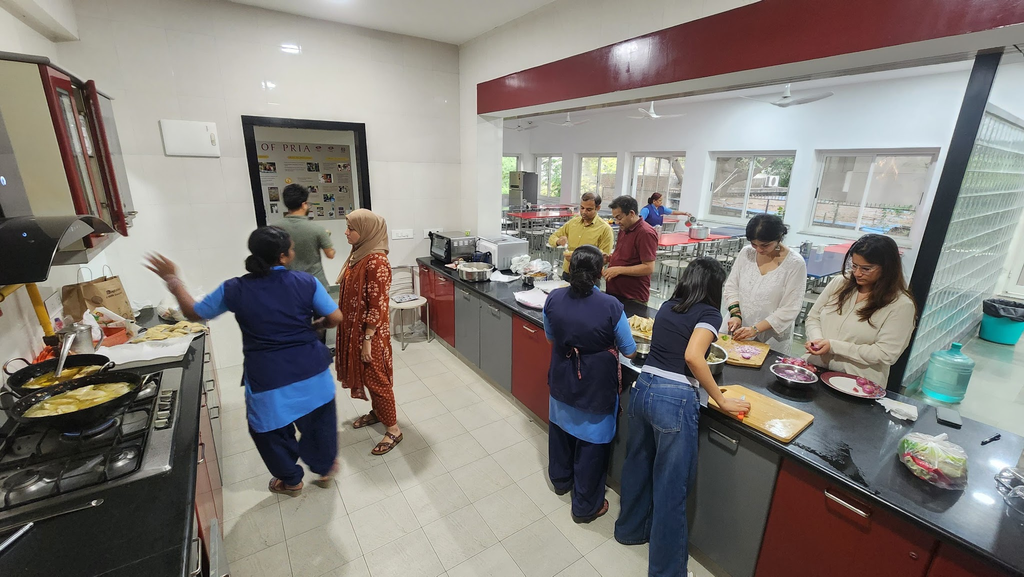
I have begun to see what this can look like at PRIA. There is a conscious attempt to recognise how everyday organisational practices can reproduce unequal divisions of labour.
Everyone is encouraged to wash the cups and plates they use rather than leaving care work to someone else. It is a small practice, but it encourages all of us to think about how labour is organised and shared.
Gender is also treated as a cross-cutting concern across programmes, institutional mechanisms and informal spaces. These practices do not suggest that organisations “arrive” at gender justice. They show that workplaces can become spaces of continuous learning where questioning is encouraged.
Learning to Ask Better Questions
Perhaps this was the process I was looking for when I wandered through my father’s office wondering where the women employees were. Gender mainstreaming is not about arriving at the right answers once and for all. It is about learning to ask better questions, remaining willing to question them again, and creating institutions that are prepared to do the same. PRIA International Academy’s courses on Gender and Development offer an opportunity to explore these questions further, examining how gender shapes institutions, development processes and everyday life, and how we can work towards more transformative change. The journey towards gender justice begins with learning to notice what has long been accepted as ordinary.
For more reflections like this, visit the PRIA International Academy blog.