Author Archives: priaacademy_admin

PRIA’s Commitment to Gender Mainstreaming: Transforming Governance, Participation, and Everyday Realities

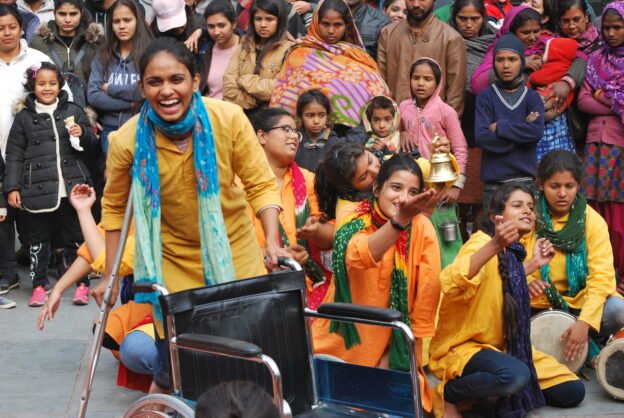
When PRIA (Participatory Research in Asia) was founded in 1982, it carried a bold vision to democratize knowledge and strengthen citizen participation. From the outset, gender was never treated as an add-on. The belief was clear that true democracy cannot exist without equity. That meant dismantling patriarchal structures and ensuring women, young girls, non-binary individuals, and marginalized communities and genders were at the centre of change.

Over the last 44 years, this conviction has guided PRIA’s journey, weaving gender into every strand of its work, whether in governance, health, education, or urban development, as part of its commitment to gender mainstreaming.

Gender Mainstreaming in Local Governance and Leadership

This philosophy soon found expression in villages and towns across India. Women elected to Panchayati Raj Institutions and urban local bodies often faced silence imposed by patriarchal norms. Reservations had opened doors, but confidence and agency were still missing. Through PRIA’s training, peer forums, capacity-building and rights awareness, many of these women began to speak, to lead, and to demand recognition.

Slowly, spaces of governance shifted from being male-dominated to more representative of diverse voices through sustained gender mainstreaming efforts.

Gender Mainstreaming in Urban Development and Basic Services

As India’s cities expanded, new challenges emerged. Women and marginalized groups were frequently excluded from housing, sanitation, and safe mobility.

Linking gender equity to urban governance became essential. Community members and elected representatives were trained to prepare Water Security Plans and lead sanitation campaigns, ensuring women’s voices shaped solutions to everyday problems as part of community-level gender mainstreaming.

These efforts showed that equity is not abstract but it is lived in the daily realities of water, safety, and mobility.

Gender Mainstreaming Within Civil Society Organisations

Beyond governance, the journey extended into civil society. Organizations were encouraged to look inward, to question their own structures, and to adopt inclusive practices. Participatory research became a powerful tool here, centering the voices of women, youth, SC/ST communities, and the urban poor.

By co-creating knowledge, gender equity was embedded into the very fabric of social transformation, not treated as an afterthought.

Changing Mindsets Through Gender Mainstreaming Initiatives

Changing structures was only part of the story, equally important was changing mindsets. Programs like Unlearning Patriarchy invited communities and organizations to reflect on the stereotypes and practices that perpetuate inequality as part of deeper gender mainstreaming journeys.

These were not prescriptive training but collective journeys of learning, where individuals discovered their own power to influence change. Reflection and dialogue opened spaces for new narratives of equality to emerge.

More Reads: Reflections from an Arts-Based Learning Circle at PRIA, India

Keeping Gender Still on the Agenda Through Gender Mainstreaming

Bringing these threads together, the initiative Gender Still on the Agenda reminded policymakers, practitioners, and communities that equity must remain central to development.

Projects such as skill-building and technical training for girls, education and empowerment initiatives, support for domestic workers in Gurgaon (Sapne Mere, Bhavishya Mere), and MobiliseHer for gender-responsive mobility systems PRIA addressed structural barriers that limit women’s opportunities in education, work, and urban life.

These efforts combined participatory approaches with advocacy, ensuring that women and marginalized groups were not just recipients of change but active agents shaping it.

Building Institutional Capacity Through Gender Mainstreaming Training

Transformation also required institutions to evolve. Through structured training programs, PRIA International Academy embedded gender sensitivity into courses for government officials, development professionals, and grassroots leaders, strengthening institutional gender mainstreaming practices.

Using participatory methodologies, these trainings encouraged organizations to adopt inclusive practices in their structures and cultures.

Gender Audits as Tools for Gender Mainstreaming

A key instrument in this process has been gender audits. These audits examine whether women and marginalized groups have equal access to opportunities, leadership roles, and decision-making spaces.

They assess policies, workplace culture, and representation, while pairing findings with capacity-building workshops to ensure action follows assessment. By connecting audits to broader advocacy, lessons learned have fed into policy debates on workplace equity and governance reforms. In this way, inclusion becomes systemic rather than tokenistic.

More Reads: Transformative Pedagogy in Content and Process: PRIA’s Cross-Border Work with HEIs

The Future of Gender Mainstreaming at PRIA

As India and the world continue to grapple with persistent inequalities, PRIA’s work has evolved from confidence-building and rights awareness in the 1990s, to campaigns against discrimination in the 2010s, and now to digital, continuous, and inclusive learning systems in the 2020s rooted in gender mainstreaming.

Across this trajectory, the organization has remained steadfast in its belief that gender justice is not a separate agenda but the foundation of democratic, participatory, and sustainable development.

Final Thoughts

If you feel inspired to be part of this journey, PRIA welcomes you to reach out, share your ideas, and collaborate. Whether you are an individual, a community group, or an institution, connecting with PRIA means joining a movement that keeps Gender Still on the Agenda.

You can explore more through www.pria.org or write to pia@pria.org, because change begins when we come together to imagine and act for a more inclusive future. To be part of training and capacity-building programs on gender, or to help your organisation integrate gender, contact us at PRIA International Academy.
Reflections from an Arts-Based Learning Circle at PRIA, India

Just a few days after I joined PRIA, I walked into a Learning Circle on Arts-Based Research Methodology. Though I was familiar with the methodology, I still expected to learn about new tools and methods. What I did not anticipate was how an informal setting can go deeper and unsettle some of the assumptions about research, knowledge, and what it truly means to listen to others. 

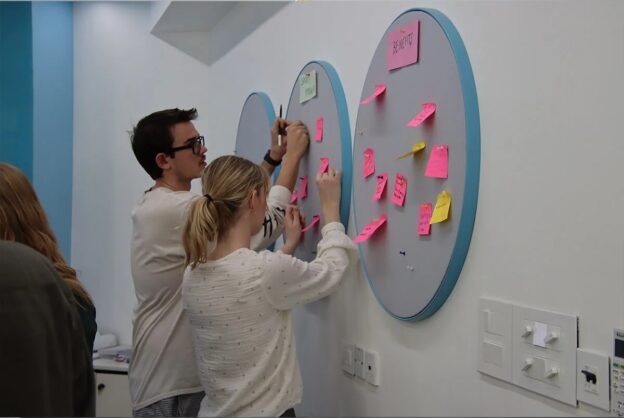
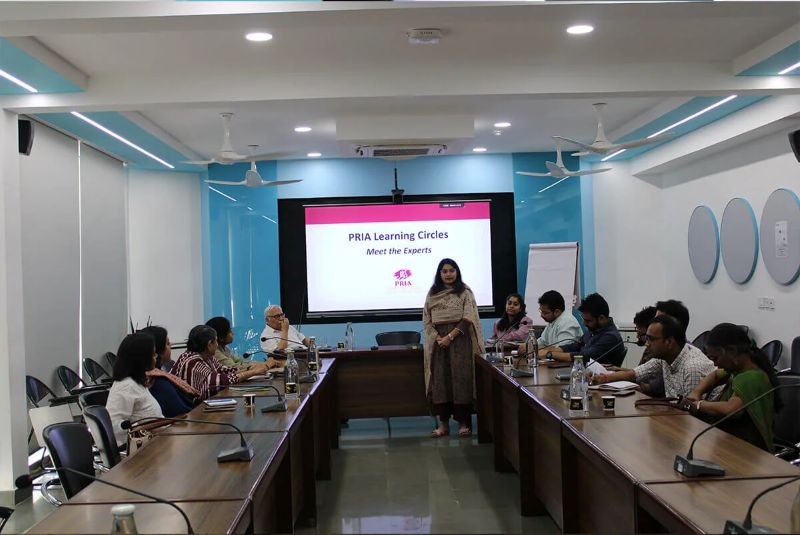
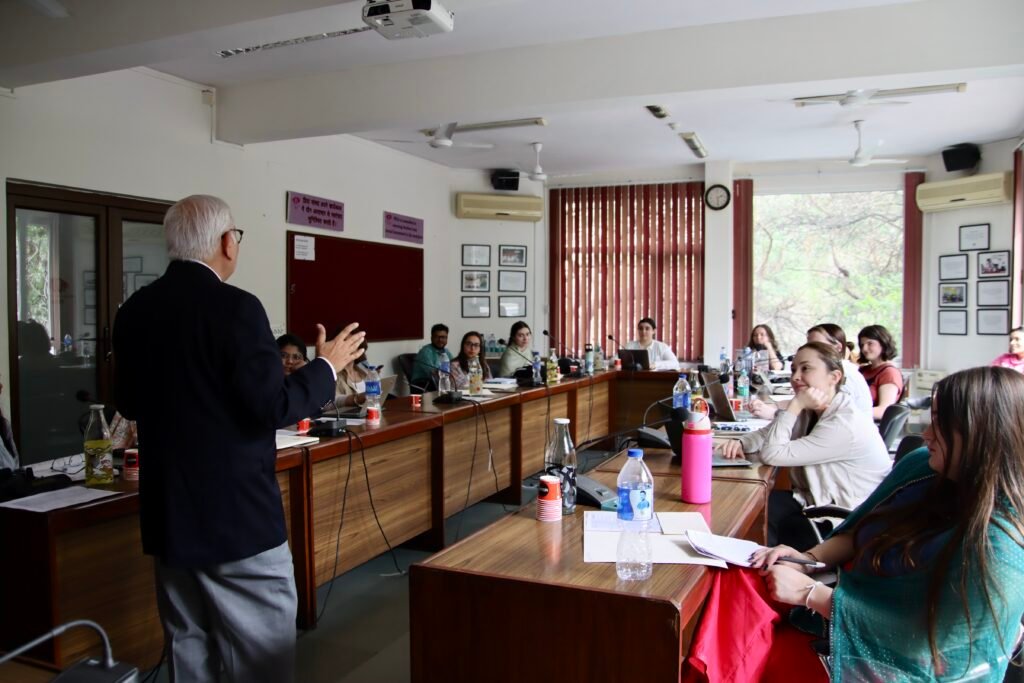
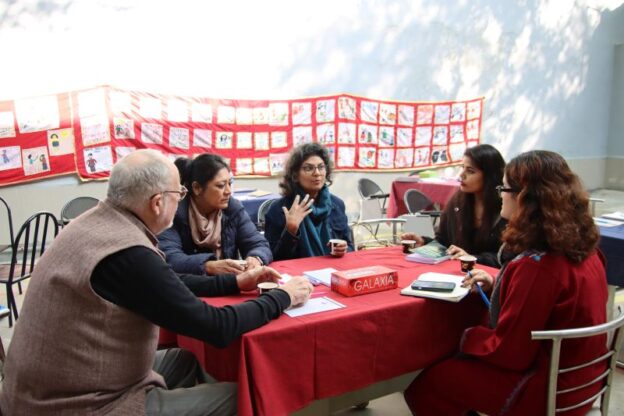
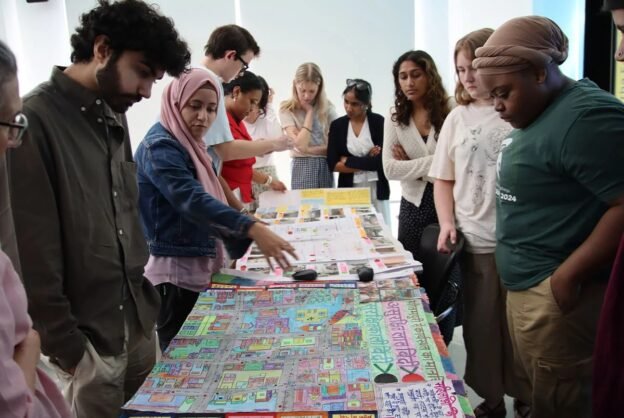
The Learning Circle format included professionals working in the sector from across India, along with several international participants. The day began gently, in an open space. The facilitators invited the participants to introduce themselves, not only by name and affiliation, but by sharing one thing that gives them hope.  As responses moved from sunlight, music, and nature to moments of despair and uncertainty, the room quickly became more than a professional gathering. It became an effective and inclusive space where emotional honesty was not only permitted but valued.

This opening exercise set the tone for the day, reminding me that research is never neutral and that the people who conduct it carry their own vulnerabilities into the field. Arts-based research methodology invites such reflexivity as an essential component of knowledge creation.

Diverse Stories and Experiences

Stories were shared from different contexts, reflecting the diverse kinds of work participants were engaged in. The Learning Circle was designed to deepen our understanding of arts-based research as an alternative, participatory way of generating knowledge, especially in spaces where conventional methods often fall short. One thing that stayed with me the most was how arts-based methodologies create room for expression.

Hearing the experiences of violence shared by domestic workers, alongside examples of communities in Uganda using theatre and role-play to reflect on COVID-19 lockdown realities, demonstrated how art can hold pain, resistance, and hope simultaneously. It was not just research but a way where ownership takes place and transforms data into something rational and alive. 

Learning Through Photovoice

To explain what Photovoice method is, a small activity was conducted where participants were asked to capture an image that represents hope to them. The group exercise showed how interpretations are never singular. A plant, PRIA office signage, a library image, even a three-legged dog became symbols layered with resilience, scarcity, care, and survival.

I was struck by how easily we assume we understand what others intend to convey, and how much deeper our insights become when we pause to listen attentively rather than rush to interpret one of the core principles in arts-based research methodology.

Ethics and Facilitation in Arts-Based Methods

From my personal experience, I understood that although arts-based methods are deeply powerful, they are not inherently emancipatory. Their impact depends entirely on how ethically and skilfully they are facilitated. This challenged my earlier assumptions about creative approaches.

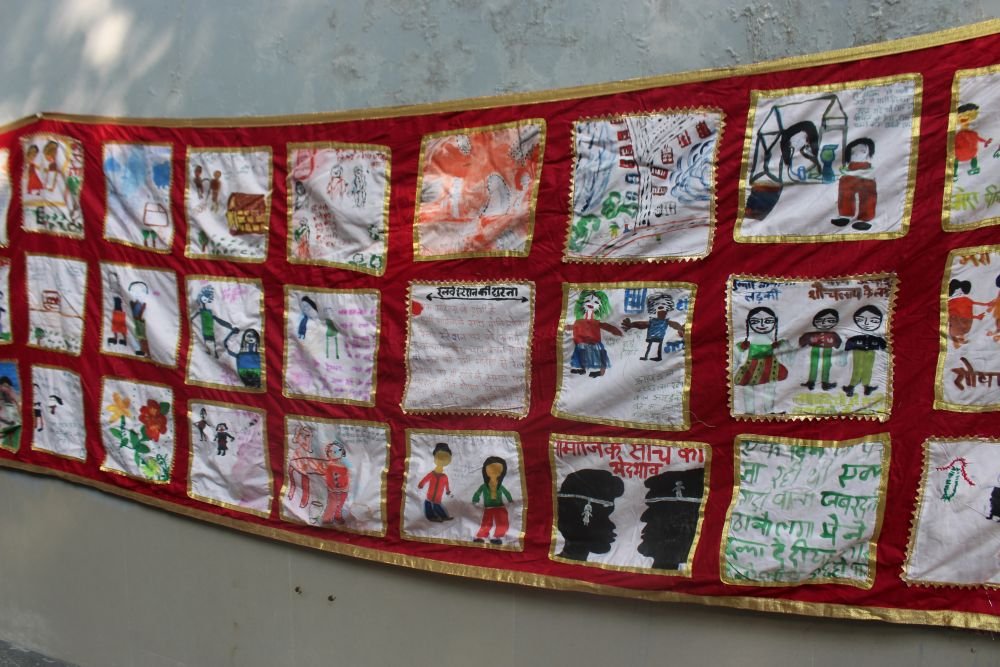
For instance, when we heard about women domestic workers documenting experiences of violence through a collectively created saree, it was clear that the method worked not simply because it was art, but because it created a safer alternative to verbal disclosure which allowed women to express, protect themselves, and still retain ownership over what they chose to share.

Similarly, the use of theatre and role-play in Uganda showed how participation, consent, and emotional safety could be built through a process that was dialogic rather than confrontational highlighting how arts-based research methodology can be applied in diverse, sensitive contexts.

Key Takeaways on Arts-Based Research

I came away with a clearer understanding that arts-based research demands emotional literacy, trauma-informed practice, and humility, especially in settings where we enter communities as outsiders.

1. Learning Circles as Transformative Spaces

As the session ended, it became clear to me that PRIA’s learning circles are more than training programmes. They are intentionally held spaces for dialogue, reflection, and collective inquiry, where practitioners, researchers, and educators from diverse contexts pause, question dominant ways of knowing, and learn alongside one another.  It gave me a renewed sense of responsibility as a researcher and practitioner. 

2. A Unique Opportunity for Participatory Learning

For anyone seeking research practices that are grounded, participatory, and deeply human, PRIA’s Learning Circles offer something unique. They invite you to listen beyond words and imagine more just and creative ways of producing knowledge.

What made my experience even more meaningful was meeting people from diverse contexts, across sectors, geographies, varied languages, and lived realities which turned the Learning Circle into not just a space for learning, but also for shared reflection, connection, and networking. Arts-based research methodology lies at the heart of this transformative experience.

This experience reaffirmed the value of shared learning spaces, and why I would return to them again.

Transformative Pedagogy in Content and Process: PRIA’s Cross-Border Work with HEIs

Ever since 2010, PRIA International Academy (PIA) has been facilitating regular learning visits to India for students and faculties from various Higher Education Institutions (HEI) from around the world.

The importance of HEIs lies in driving innovation, empowering individuals with skills, addressing societal challenges through research, and deepening their knowledge of community realities. Through curated HEI visits, PIA bridges theory and lived experience, cultivating empathy, reflexivity, and a nuanced understanding of global citizenship that shapes learners into true global citizens.

It equips students with awareness of social, political, and economic realities beyond their own contexts, and an understanding of how local struggles are embedded in global systems. 

The COVID-19 pandemic brought major changes to Higher Education Institutions (HEIs), forcing them to shift from traditional face-to face learning to digital systems. Due to the pandemic’s sudden halt to international travel, educators everywhere were induced to reconsider experiential learning. The disruption was particularly severe for programs based on field-based pedagogy. During this time, PRIA Academy adapted its long-standing HEI engagement model into a virtual field school format.

A Global Leadership Virtual Field School was intended to create an interactive opportunity to engage with community leaders in other parts of the world. This educational format was valuable for promoting transformative pedagogy in both content and process, spurring innovative teaching, despite the limitations. 

Without compromising depth, rationality, or transformative impact, a conventional international field school was converted into a fully online, participatory learning environment. This blog examines how a graduate-level leadership course, drawing PRIA’s practice of participatory pedagogy and Transformative Learning Theory, offered an influential model for inclusive and justice-oriented education through a virtual Field School.  

Reimagining the Field School Experience

Field schools directly engage students with the communities that are experiencing the social, political, and economic realities that are studying outside the classroom. Faculty and partners from Royal Roads University and Participatory Research in Asia (PRIA) reimagined the experience in a virtual format when an in-person field school in India was no longer viable.

The Global Leadership Virtual Field School was created purposefully to maintain the relational, dialogic, and experiential core of field-based learning rather than replicating lectures online. During the seven weeks of the virtual site, the graduate students engaged with grassroots initiatives on women’s leadership, youth empowerment, informal labour, urban governance, and gender justice and visited community groups across India. 

The Transformative Learning Theory

The principal of virtual field school was the Transformative Learning Theory, which emphasizes critical reflection, perspective transformation, and collective meaning making through experience. The rational, emotional, social, and, for some students, spiritual aspects of transformation were all incorporated into the course design.

In the process, students weren’t just passive information users. The presumptions on privilege, power, leadership, and culture were asked to examine by the students. For grassroot activism, the ‘from below’ was investigated especially in marginalized communities, through organized reflection, discussion, and exposure to a variety of lived experiences. Through such interactions, students enhanced their capacity to develop supportive, reciprocal, and productive relationships with people of different backgrounds.

The key learning objectives included were:

  • Learning about the Crafting Intercultural and Intersectional Analyses of Leadership and Power
  • Conceptualizing culture in terms of complexity, dynamism,
  • Thinking about Positionality and Paradigm of Leadership
    • Adjusting individual leadership styles in line with new learning

The Virtual Field School experience occurred during each virtual site visit; a carefully structured learning cycle involved the tasks:

  • Preparation: To understand the context and issues the students got engaged with materials, videos, and community developed resources.
  • Site Visits: The interaction between community leaders and students during real-time Zoom sessions were dialogical in nature rather than extractive in form.
  • Facilitated Meaning Making: The sessions conducted by PRIA facilitators as follow-up, helped students make meaning of nuances and context and theoretical linkages.
  • Asynchronous Reflection: The reflective thinking time was enhanced as the online forums allowed ample time for reflective thinking and the ability to share ideas.
  • Applied Assessment: The students got encouraged by the team-based multimedia projects. This helped them to integrate their learning ad bridge theory and practice.

This rhythm was repeated across five thematic site visits, enabling cumulative learning and deeper engagement over time. This reflects PRIA Academy’s commitment to non-extractive HEI partnerships, where learning flows in multiple directions.

Learning beyond borders

By moving the field school online, PRIA Academy demonstrated how HEI visits can become more accessible, inclusive, and scalable, allowing PRIA to engage a broader range of institutions and learners. All this ensured accessibility for students in terms of participation, including teaching practices, the use of closed captioning, clear visual descriptions, translation capabilities, and strategic pacing with diverse considerations. 

The Global Leadership Virtual Field School showed how powerful education can happen on-line, braced by transformational vision. It is a demonstration of PRIA Academy’s role as a strategic partner to higher education institutions. For universities seeking meaningful global engagement, PRIA Academy offers a proven pathway—one that combines scholarship, community wisdom, and transformative pedagogy into a shared learning journey. 

To know more about HEI Learning Visits contact us at pia@pria.org or visit us at https://www.priaacademy.org/ 

Note: This blog is based on “Participatory Pedagogy Online: Reflections from a Global Leadership Virtual Field School” by Catherine Etmanski, Wanda Krause, and Kaustuv Kanti Bandyopadhyay. Key insights from the article have been adapted and presented in blog format.

Why Participatory Research Tools Matter for Development Sector Professionals?

Participatory approaches have become increasingly important in social work, community development, and development research. Traditional top-down research methods often treat communities as passive sources of information, leading to interventions that are irrelevant, ineffective, or unsustainable for those most affected by the issue. In contrast, participatory approaches recognise communities as active partners in knowledge creation. Through participatory research tools and participatory tools and techniques, development professionals can co-design research with communities that are ethical, relevant, action-oriented, and rooted in community realities.

Participatory tools empower communities by valuing lived experience, encouraging dialogue, and sharing decision-making power. They support the democratisation of knowledge by analysing situations and shaping solutions, making it a collaborative process which strengthens local ownership, accountability, and long-term impact. These participatory tools for community engagement are central to inclusive and sustainable development practice.

These principles of participation and co-creation form the foundation of the learning philosophy at PRIA International Academy, which integrates participatory training methodologies across its courses and learning programmes.

What Are Participatory Tools?

Research relies on data—facts, information, and observations used to understand a situation. Data may come from secondary sources such as books, reports, and media, or from primary sources like interviews, conversations, and observations. In conventional research, data collection is often extractive, where researchers control the questions, collect mainly numerical data, and analyse it independently. Participatory research, by contrast, relies on both qualitative and quantitative data, generated through a collective process with the community using participatory learning and action tools and participatory learning action tools and techniques.

Participatory tools aim to co-create knowledge by jointly analysing issues and planning actions that move beyond top-down approaches, leading to more ethical, relevant, and sustainable outcomes. Key characteristics of participatory research include the validation of local knowledge, a strong emphasis on empowerment and action, flexibility in methods, and a democratic and collaborative approach to knowledge generation. Participatory research is inherently context-specific and adaptive to community needs. As a result, participatory research tools move beyond data collection to foster collective inquiry, shared decision-making, and meaningful social change.

PRIA International Academy introduces learners to participatory learning and action tools through structured online self-learning courses that combine theory with field-based examples.

Participatory Research Tools

Participatory research tools, also known as Community-Based Participatory Research (CBPR) tools, are widely used approaches that value local knowledge and promote collective reflection and community-driven planning. CBPR offers an alternative to conventional research by emphasizing research conducted with communities rather than on or for people affected by the issues being studied. The actionable knowledge co-produced through this participatory process is intended to support social change.

Common CBPR tools include mapping, transect walks, and problem and solution mapping, which are also widely recognised as participatory rural appraisal (PRA) tools. These tools actively involve communities through dialogue, enabling collective reflection, problem analysis, and the identification of actions that support long-term change. Creative participatory tools, such as storytelling, drawing, theatre, music, photography, video, and art, further enhance inclusion by providing diverse modes of expression and reflection.

Other participatory tools, including community action planning and visioning exercises, function as participatory planning tools that support communities in defining goals, identifying resources, and planning collective action. Participatory design tools including co-creation workshops, empathy mapping, collaborative brainstorming, and community-informed prototyping, play a crucial role in ensuring that services and programmes are shaped by genuine community needs rather than external assumptions. Additionally, participatory research methods such as community-designed surveys, participatory interviews, and participant observation engage community members as co-researchers, strengthening data quality, ethical practice, and shared ownership of findings.

Learning about CBPR tools is essential due to their broad applicability across social development sectors, including agriculture, health, natural resource management, disaster risk reduction, and rural planning. As these tools are adaptable to diverse contexts, their relevance extends well beyond this list. By generating locally grounded, context-specific knowledge, participatory learning and action tools strengthen community agency in shaping development processes that affect their lives.

Learners can explore practical applications of participatory research tools through PRIA Academy courses on participatory training methodology and community-based research.

Why Participatory Tools Matter for Development Professionals and Students

For development professionals, learning participatory tools is essential for conducting research that is meaningful, ethical, and locally relevant. These participatory research tools and participatory tools and techniques promote genuine engagement rather than data extraction, enabling communities to actively shape both research and action. Similarly, for students entering social work, development studies, or research fields, participatory tools help build critical skills such as ethical sensitivity, facilitation, reflexivity, and an understanding of power dynamics, preparing them to work with communities rather than on them.

This emphasis on participatory learning is also strongly aligned with the National Education Policy (NEP) 2020, which reinforces the importance of community engagement and social responsibility in higher education. NEP 2020 highlights the need to value local knowledge and advocates participatory, field-based learning approaches that enable students and professionals to co-produce context-specific, actionable knowledge using participatory tools for community engagement, thereby strengthening the social relevance and ethical foundations of research and practice.