Category Archives: Participatory Research

Why CBPR is the Future of Ethical and Inclusive Research

Why CBPR is the Future of Ethical and Inclusive Research

PRIA has been asking one question since 1982: whose knowledge counts? It sounds simple, but it is not. That question exposed something we were seeing everywhere: the people most affected by development decisions were almost never the ones shaping the research about them.

PRIA International Academy (PIA), established in 2005, carries that founding commitment into structured learning.

This blog makes the case for why community-based participatory research (CBPR) represents not just an ethical alternative to conventional approaches to inquiry, but also the most rigorous and effective approach for practitioners working in governance, development, and social change.

What Community-Led Research Looks Like

In traditional research practices, communities are subjects. The research begins with conversations among residents, practitioners, and institutions about what actually needs to be understood or changed.

Community research works differently. Communities identify the priorities worth studying.

They shape questions, participate in data collection, interpret findings in light of their own lived knowledge, and remain owners of what is produced. The difference is who holds the authority to define a problem.

The process involves processes like training community members to map their settlements, identify service gaps, and document household-level data using locally adapted tools. This data was then collectively reviewed within the committees before being consolidated and shared with municipal authorities in formats aligned with planning requirements.

More Reads: Learning Together: The PRIA Approach to Participatory Training Methodology

Core Principles and Competencies for Participatory Research Practitioners

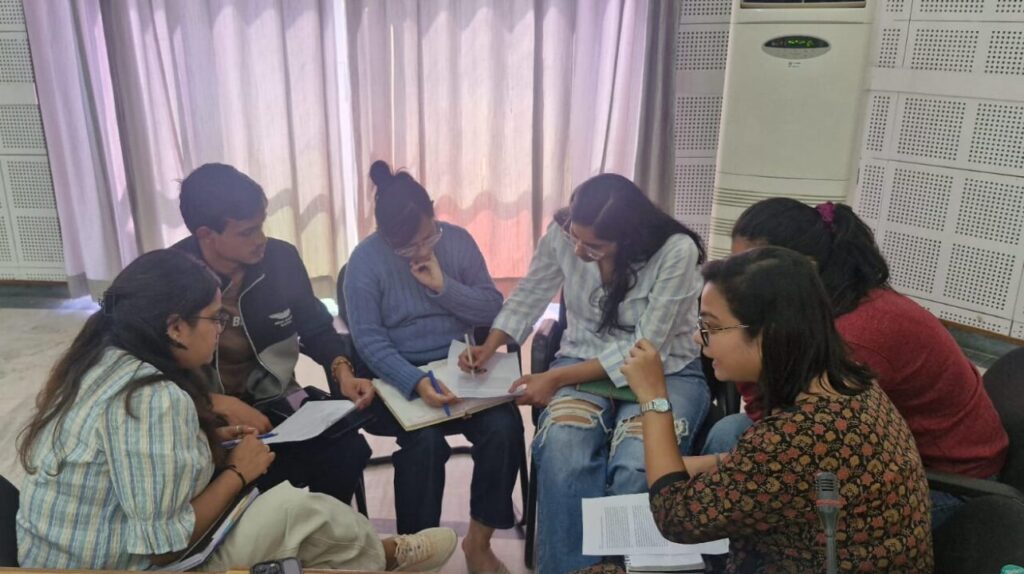
Community-based participatory research is based on a few core ideas that makes it feel more like a conversation and less like a clinical study. It’s the difference between being “studied” and being “heard.”

Partnership is foundational: researchers and communities are co-investigators, not experts and informants. 

Co-creation means that people work together to make research design, tools, and interpretations instead of just giving them to each other. Shared decision-making gives communities control over how the results are used and shared.

And ethical engagement means that the research process must not reproduce the very power imbalances it is trying to address.

The skills needed for this are not natural; they include listening to people from different backgrounds, facilitating instead of directing, engaging with institutional structure while ensuring that community-led processes are not overridden, and being aware of cultural differences at all times.

They are learned, practised, and refined.

Participatory Research (PR) emerged globally as a response to the limitations of conventional, top-down enquiry, drawing on traditions from Latin America, Africa, Asia, and Indigenous societies worldwide. 

Stories of CBPR in Action

The reach of community-based participatory research methodology extends across sectors.

In health, community members working as co-researchers in marginalised neighbourhoods have produced findings that clinical trials and hospital-based studies routinely miss because the questions being asked are different when the community sets them.

For example, community-led enquiries have documented how distance, informal costs, and social norms affect access to primary health service, factors that are not always captured in standard datasets.

Similarly, in community health contexts, locally generated data has helped identify barriers to access that standardised surveys often overlook. 

While, in urban settlements, participatory mapping and household-level data collection have been used to highlight gaps in water, sanitation, and waste management services, which in turn inform engagement with municipal systems.

PRIA’s own work across India illustrates this consistently.  The foundational question – whose knowledge counts? must be answered in every programme, in the design of every research process, and in every decision about who sits in the room when findings are discussed.

More Reads: Reflections from an Arts-Based Learning Circle at PRIA, India

How Training Prepares Researchers and Practitioners for Impact Roles

Entering the field as a participatory researcher requires more than methodological knowledge. It involves adapting one’s role in relation to communities and institutions, working collectively to define research questions, engaging communities in data collection processes, and remaining accountable for how findings are interpreted and used.

Building that orientation is what structured community-base participatory research  training does.

  • For NGO staff, it means learning to design an enquiry process that communities can genuinely lead.
  • For policy practitioners, it means understanding how community-generated evidence differs from and complements the data they are already working with.
  • For field researchers, it means acquiring the facilitation and ethical navigating skills that participatory tools require in practice.

To bridge this gap between theory and practice, PRIA’s Participatory Training Methodology (PTM) operates on a single core principle: adults learn best from experience, reflection, and application in real contexts.

The same principle shapes how participatory research practitioners develop. 

Competency is not transferred in a classroom, but built through supervised fieldwork, structured reflection, and the kind of mentorship that comes from working with experienced practitioners in real communities.

Courses and Pathways to Explore

The course “Participatory Research – A Journey Beyond Conventional Research” at PRIA International Academy gives a structured introduction to the global history, core principles, and practical tools of the community-based participatory research methodology.

PIA also offers learning circles and hybrid training workshops where practitioners develop their community research practice through facilitated peer exchange and field application.

Through a global network of alumni and cross-continental partnerships, PIA continues to put communities at the centre of every research. We don’t just teach research; we facilitate a journey where communities reclaim the power to tell their own stories and shape their own futures.

Participatory Research - A journey beyond conventional Research

Why Participatory Research Tools Matter for Development Sector Professionals?

Participatory approaches have become increasingly important in social work, community development, and development research. Traditional top-down research methods often treat communities as passive sources of information, leading to interventions that are irrelevant, ineffective, or unsustainable for those most affected by the issue. In contrast, participatory approaches recognise communities as active partners in knowledge creation. Through participatory research tools and participatory tools and techniques, development professionals can co-design research with communities that are ethical, relevant, action-oriented, and rooted in community realities.

Participatory tools empower communities by valuing lived experience, encouraging dialogue, and sharing decision-making power. They support the democratisation of knowledge by analysing situations and shaping solutions, making it a collaborative process which strengthens local ownership, accountability, and long-term impact. These participatory tools for community engagement are central to inclusive and sustainable development practice.

These principles of participation and co-creation form the foundation of the learning philosophy at PRIA International Academy, which integrates participatory training methodologies across its courses and learning programmes.

What Are Participatory Tools?

Research relies on data—facts, information, and observations used to understand a situation. Data may come from secondary sources such as books, reports, and media, or from primary sources like interviews, conversations, and observations. In conventional research, data collection is often extractive, where researchers control the questions, collect mainly numerical data, and analyse it independently. Participatory research, by contrast, relies on both qualitative and quantitative data, generated through a collective process with the community using participatory learning and action tools and participatory learning action tools and techniques.

Participatory tools aim to co-create knowledge by jointly analysing issues and planning actions that move beyond top-down approaches, leading to more ethical, relevant, and sustainable outcomes. Key characteristics of participatory research include the validation of local knowledge, a strong emphasis on empowerment and action, flexibility in methods, and a democratic and collaborative approach to knowledge generation. Participatory research is inherently context-specific and adaptive to community needs. As a result, participatory research tools move beyond data collection to foster collective inquiry, shared decision-making, and meaningful social change.

PRIA International Academy introduces learners to participatory learning and action tools through structured online self-learning courses that combine theory with field-based examples.

Participatory Research Tools

Participatory research tools, also known as Community-Based Participatory Research (CBPR) tools, are widely used approaches that value local knowledge and promote collective reflection and community-driven planning. CBPR offers an alternative to conventional research by emphasizing research conducted with communities rather than on or for people affected by the issues being studied. The actionable knowledge co-produced through this participatory process is intended to support social change.

Common CBPR tools include mapping, transect walks, and problem and solution mapping, which are also widely recognised as participatory rural appraisal (PRA) tools. These tools actively involve communities through dialogue, enabling collective reflection, problem analysis, and the identification of actions that support long-term change. Creative participatory tools, such as storytelling, drawing, theatre, music, photography, video, and art, further enhance inclusion by providing diverse modes of expression and reflection.

Other participatory tools, including community action planning and visioning exercises, function as participatory planning tools that support communities in defining goals, identifying resources, and planning collective action. Participatory design tools including co-creation workshops, empathy mapping, collaborative brainstorming, and community-informed prototyping, play a crucial role in ensuring that services and programmes are shaped by genuine community needs rather than external assumptions. Additionally, participatory research methods such as community-designed surveys, participatory interviews, and participant observation engage community members as co-researchers, strengthening data quality, ethical practice, and shared ownership of findings.

Learning about CBPR tools is essential due to their broad applicability across social development sectors, including agriculture, health, natural resource management, disaster risk reduction, and rural planning. As these tools are adaptable to diverse contexts, their relevance extends well beyond this list. By generating locally grounded, context-specific knowledge, participatory learning and action tools strengthen community agency in shaping development processes that affect their lives.

Learners can explore practical applications of participatory research tools through PRIA Academy courses on participatory training methodology and community-based research.

Why Participatory Tools Matter for Development Professionals and Students

For development professionals, learning participatory tools is essential for conducting research that is meaningful, ethical, and locally relevant. These participatory research tools and participatory tools and techniques promote genuine engagement rather than data extraction, enabling communities to actively shape both research and action. Similarly, for students entering social work, development studies, or research fields, participatory tools help build critical skills such as ethical sensitivity, facilitation, reflexivity, and an understanding of power dynamics, preparing them to work with communities rather than on them.

This emphasis on participatory learning is also strongly aligned with the National Education Policy (NEP) 2020, which reinforces the importance of community engagement and social responsibility in higher education. NEP 2020 highlights the need to value local knowledge and advocates participatory, field-based learning approaches that enable students and professionals to co-produce context-specific, actionable knowledge using participatory tools for community engagement, thereby strengthening the social relevance and ethical foundations of research and practice.