
What if policies were built on facts from the people they affect, not assumptions?
Have you ever noticed how the same policy can mean different things to different people?
A report may call it a success. Someone in the community may quietly say, “It didn’t work for us.”
Neither response should be ignored.
This is where Evidence-Based Policymaking becomes important. It encourages us to understand a problem before trying to solve it. On this page, you’ll learn what Evidence-Based Policymaking is, why it matters and how different kinds of evidence help shape better public decisions.
What is Evidence-Based Policymaking?
When we hear the word evidence, we often think about research reports or government data.
They matter. But they are not the only source of evidence.
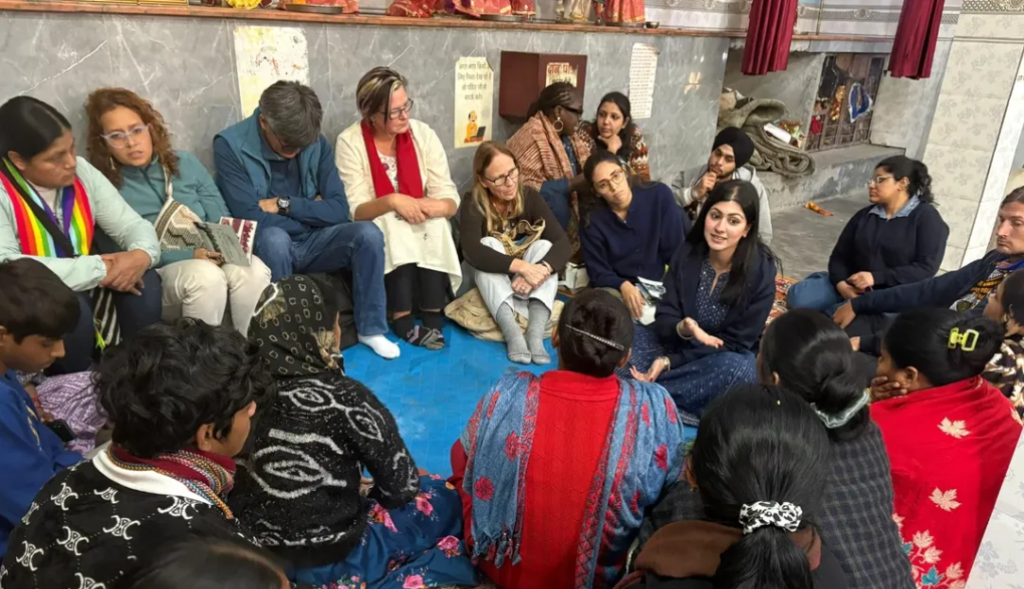
People’s experiences matter too. A conversation in a village meeting, feedback from a public consultation or a pattern that keeps appearing across different communities can all tell us something worth paying attention to.
In simple terms, Evidence-Based Policymaking means making public decisions using reliable evidence instead of assumptions.
More formally, it is policy formulation grounded in systematic research, citizen-generated data, and participatory evidence processes. It brings research and people’s experiences into the same conversation, helping connect evidence with public decision-making.
Why It Matters
Policies are written with people in mind. It makes sense, then, that people should have a place in understanding whether those policies are working.
Research may tell us what has changed. Citizen-generated data often helps explain why.
When both are considered together, decisions become more informed, more transparent and more closely connected to what communities are actually experiencing.
How It Works
Evidence comes from different places. Researchers may carry out participatory surveys. Communities may share their experiences through Citizen Report Cards or community scorecards. These methods help capture perspectives that are not always visible in official records.
The evidence is then discussed with policymakers. Instead of relying on assumptions alone, decisions are informed by research, community knowledge and ongoing dialogue.
Real-World Examples
A district reviews its healthcare data and sees that more people are visiting local clinics. The numbers look encouraging. Then Citizen Report Cards reveal that many older residents still struggle to reach those clinics because transport is unreliable.
In another community, parents, teachers and local officials use community scorecards to discuss local schools. Together, they identify challenges that attendance figures alone could not explain. Looking at both evidence and experience leads to a fuller understanding of the situation . If you’d like to go a step further, PIA’s course, Participatory Research: A Journey Beyond Conventional Research, walks through how participatory methods generate the kind of evidence discussed here, the sort that surfaces alongside official data rather than instead of it.
Key Takeaway
Evidence-Based Policymaking reminds us that good decisions are built on more than data. They are strengthened when research and people’s experiences are considered together.
Continue Learning
At PIA, we believe that listening is an important part of learning. If you found this glossary useful, bookmark it and share it with others. You can also explore Citizen Report Card and Participatory Monitoring and Evaluation to learn how communities contribute to better public decision-making.