
India’s 73rd and 74th Constitutional Amendments marked a turning point in Indian democracy, granting constitutional status to rural (Panchayats) and urban (Municipalities) local self-governing bodies. This landmark reform embedded decentralisation at the heart of governance, creating the structural foundation for participatory democracy at the grassroots level.
What Is Decentralisation? Meaning and Significance
Decentralisation – also spelled decentralization – means the transfer of decision-making authority, responsibilities, and resources away from a central government to local or regional bodies. In the Indian context, this is often described as the decentralisation of power: elected representatives, administrative staff, and financial authority are moved closer to the citizens they serve.
A related concept, democratic decentralisation, refers specifically to decentralisation carried out through elected local institutions – Panchayats and Municipalities – rather than simply delegating tasks to unelected bureaucrats. This is the model India adopted through the 73rd and 74th Constitutional Amendments.
The significance of decentralisation lies in what it makes possible: governance that responds faster to local needs, accountability that flows downward to citizens rather than only upward to ministries, and public services that are shaped by the people who actually use them. When these conditions are met, a decentralised government can address local priorities more effectively than a centralised one – though, as the rest of this article explores, that outcome depends on how well local institutions are equipped to use their authority.
Since 1995, PRIA (Participatory Research in Asia) has worked extensively to strengthen Panchayati Raj Institutions (PRIs) across India, promoting decentralised governance and empowering marginalised groups. Over the decades, key milestones have included training more than 125,000 elected leaders to strengthen grassroots democracy, running voter awareness campaigns such as PEVAC to expand citizen participation, facilitating participatory planning processes that enable communities to set their own priorities, and advising governments on policy devolution to bring decision-making closer to the people.
As PRIA’s decades of work have shown, decentralisation is not a one-time reform but a continuous process of democratic deepening – one that demands sustained investment in institutions, capacity building, and citizen engagement.
What Decentralisation of Government Means in Practice
In formal terms, decentralisation refers to the redistribution of authority — transferring decision-making power, responsibility, and resources from central governments to local bodies. It streamlines operations by allowing those closest to daily tasks to make faster, more contextually informed decisions, increasing efficiency and responsiveness rather than relying on top-down directives. Political decentralisation transfers decision-making to elected representatives, administrative decentralisation delegates planning and implementation, and fiscal decentralisation ensures predictable revenue streams and expenditure autonomy. These dimensions must evolve together if local governance is to be meaningful.
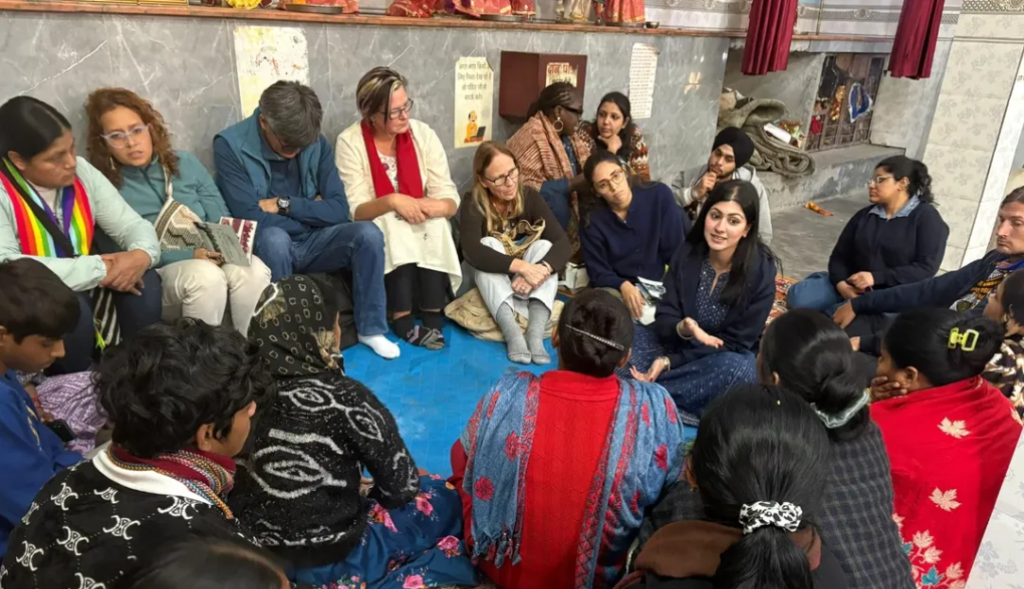
In practice, however, PRIA often encountered half-empty gram sabhas, under-staffed panchayat offices, and municipal councils nominally responsible for services but lacking real authority. Bridging this gap between constitutional promise and lived reality became central to PRIA’s mission.
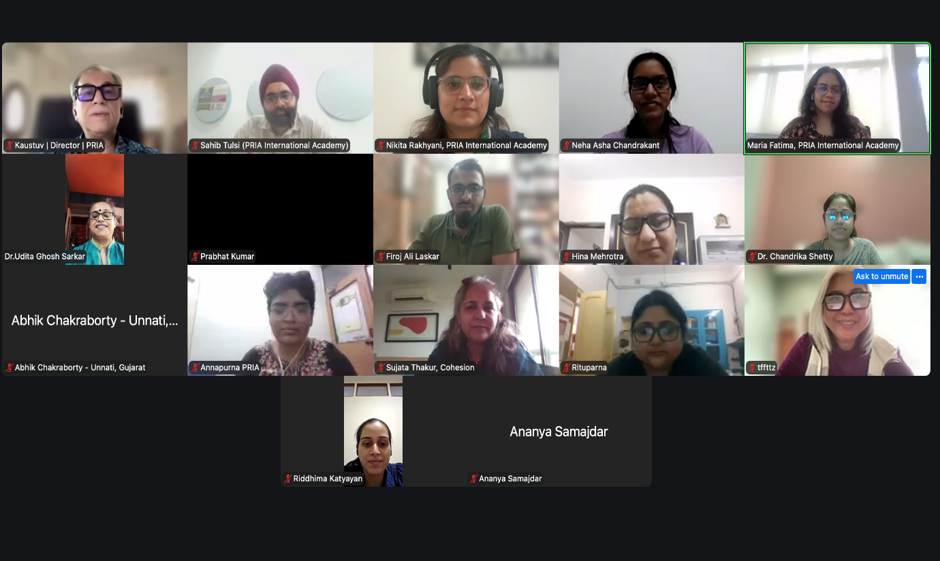
This challenge also surfaced in PRIA’s educational work. When developing online courses through the PRIA International Academy (PIA), a recurring pattern emerged: learners found it difficult to connect constitutional provisions with the realities of everyday governance. The courses were therefore deliberately designed to bridge theory and practice, making abstract principles accessible and directly relevant to participants’ lived contexts.
More Reads: Why Participatory Research Tools Matter for Development Sector Professionals?
Centralisation vs. Decentralisation: Who is Accountable?
The contrast between centralisation and decentralisation is often explained in terms of where decisions are made. But PRIA’s experience suggests a more useful question: who is accountable to whom, and through what mechanisms? In centralised systems, accountability flows upward to ministries and audit bodies. Decentralisation, by contrast, creates the possibility of accountability flowing downward to communities. Making this possibility real requires active construction — functioning gram sabhas, participatory planning, and evidence-based dialogue between citizens and officials.
In developing the online course on ‘Working with Panchayats,’ PRIA examined the institutional backbone of decentralisation — District Planning Committees, State Election Commissions, and Finance Commissions. While these bodies were designed to safeguard local democracy, their performance has varied widely across states: Kerala’s functional DPCs stand in contrast to Madhya Pradesh’s dormant ones, and State Election Commissions often face political interference. By situating these institutions within participatory planning frameworks, the course was structured to help learners critically analyse both the successes and the challenges of decentralisation in practice.
More Reads: Why Is PRIA’s Participatory Approach the Need of the Hour
Why Working with PRIs Matters
PRIs are constitutionally mandated democratic institutions, but many representatives struggle to navigate planning procedures, financial rules, and accountability mechanisms.
Recognising this, PRIA has consistently invested in Participatory Training Methodology (PTM), building systems of participatory planning and equipping leaders with the practical skills they need to govern effectively.
Through case studies incorporated into the courses, learners encounter decentralisation not as abstract policy but as lived practice. Learners resonated most with stories where citizen participation directly shaped outcomes — whether through women’s active presence in Gram Sabhas or Panchayats exercising fiscal autonomy to design locally relevant projects.

The Advantages of Decentralisation
When decentralisation works as intended, its advantages are distinct and significant:
- Local bodies are uniquely positioned to understand infrastructure gaps, seasonal service demands, and social hierarchies — making governance more responsive to those actually affected
- Accountability deepens when citizens have both the knowledge and the channels to engage meaningfully with local government
- Resource utilisation improves when planning authority is matched with contextual understanding and community ownership
Yet, as PRIA’s work has consistently shown, none of these advantages emerge automatically. They must be cultivated through training, peer learning, participatory audits, and structured dialogue. Decentralisation is not simply a technical reform, it is a democratic practice rooted in everyday life.
More Reads: PRIA’s Commitment to Gender Mainstreaming: Transforming Governance, Participation, and Everyday Realities
Conclusion: Decentralisation as Democratic Deepening
Decentralisation is ultimately about cultivating democratic practices that bring governance closer to people’s everyday lives. When local institutions are equipped to plan, manage resources, and engage citizens meaningfully, democracy becomes more responsive, transparent, and inclusive. The real test lies in whether citizens can see their voices reflected in village assemblies, ward committees, and municipal councils.
Through the PRIA International Academy, practice-based courses continue to nurture this vision — helping elected leaders, officials, and civil society practitioners translate constitutional mandates into lived realities. PRIA’s long-standing commitment reminds us that decentralisation is best understood not as a reform completed, but as a democracy continuously renewed through citizen participation and institutional strengthening.
PEVAC stands for Pre‑Election Voter Awareness Campaign. It was initiated by PRIA to strengthen citizen participation in local governance, especially around Panchayat elections after the 73rd Constitutional Amendment in India.
Kerala Institute of Local Administration (KILA): 25th Year of People’s Plan Campaign in Kerala Local Governments – documents how DPCs consolidate Gram Panchayat and municipal plans into district strategies, supported by citizen participation and technical committees
Press Information Bureau (PIB): Explains how DPCs in many states, including Madhya Pradesh, were constituted mainly to meet central funding requirements under the Backward Regions Grant Fund (BRGF), but remained weak in practice.
Frequently Asked Questions
What is decentralisation?
Decentralisation (decentralization) is the transfer of decision-making authority, funds, and responsibilities from a central government to local or regional institutions, so that decisions are made closer to the people they affect.
What is the significance of decentralisation?
Its significance lies in faster, more locally-informed decision-making, stronger downward accountability to citizens, and public services shaped by the communities that use them.
What is democratic decentralisation?
Democratic decentralisation is decentralisation carried out through elected local bodies — such as Panchayats and Municipalities — rather than appointed officials, ensuring local authority remains accountable to citizens through elections.
What is political decentralisation?
Political decentralisation specifically transfers decision-making power to elected representatives at the local level, as distinct from administrative or fiscal decentralisation.