India’s journey towards decentralisation has been long and uneven. From Mahatma Gandhi’s idea of Gram Swaraj to the constitutional recognition of Panchayati Raj Institutions (PRIs), the aspiration has remained clear: people should have a greater say in decisions that affect their lives and communities.
More than three decades after the 73rd Constitutional Amendment, Panchayats have become one of the world’s largest systems of elected local government. Yet an important question remains: have Panchayats become institutions of local self-government, or do they still largely function as implementing agencies of higher levels of government?
Decentralisation is not simply about moving administrative responsibilities downward. It is about bringing decision-making closer to citizens and enabling local institutions to respond to local priorities.
From Gram Swaraj to Constitutional Local Government
The idea of village self-government has deep roots in India’s political thinking. Gandhi’s conception of Gram Swaraj placed the village at the centre of democratic life. Article 40 of the Constitution similarly directs the State to organise village Panchayats and provide them with the powers necessary to function as units of self-government.
The decisive institutional shift came with the 73rd Constitutional Amendment in 1993. It gave constitutional status to Panchayats, established regular elections, provided reservations for women and disadvantaged communities, recognised the Gram Sabha, and identified 29 subjects in the Eleventh Schedule for possible devolution.
The amendment therefore did more than create another administrative tier. It placed Panchayats within India’s democratic architecture as institutions of local self-government.
More Reads: Understanding Panchayati Raj Institutions (PRI): Decentralisation, Democracy and Local Governance
Three Decades of Local Democracy
The scale of this transformation is significant. According to the Ministry of Panchayati Raj’s Basic Statistics of Panchayati Raj Institutions 2025, India had 2,62,523 Panchayati Raj Institutions and 24,14,943 elected representatives as of 31 March 2025. Women accounted for about 48.4 per cent of elected PRI representatives.
These figures demonstrate the reach of grassroots democracy and the expansion of women’s political representation. But representation is only one dimension of decentralisation.
The more important question is: what can Panchayats actually decide, plan and influence?
More Reads: My First Field Visit in India: Reflections from Rural Chhattisgarh
From Representation to Real Devolution
Although the constitutional framework is common across India, actual devolution varies considerably between states. The Ministry of Panchayati Raj’s Devolution Index Report 2024 assesses Panchayats across framework, functions, finances, functionaries, capacity building and accountability. The national average score was 43.89, while Karnataka, Kerala and Tamil Nadu recorded the highest scores.
This variation highlights an important reality: constitutional recognition does not automatically translate into effective local self-government. The actual authority of Panchayats depends on the devolution of functions, finances, personnel and decision-making powers.
The Parliamentary Standing Committee on the implementation of the 73rd Constitutional Amendment has similarly highlighted uneven devolution and noted that Panchayats often continue to function primarily as implementing agencies.
Implementing a programme designed elsewhere is not the same as exercising local self-government.
More Reads: Why CBPR is the Future of Ethical and Inclusive Research
What Does Decentralisation Look Like on the Ground?

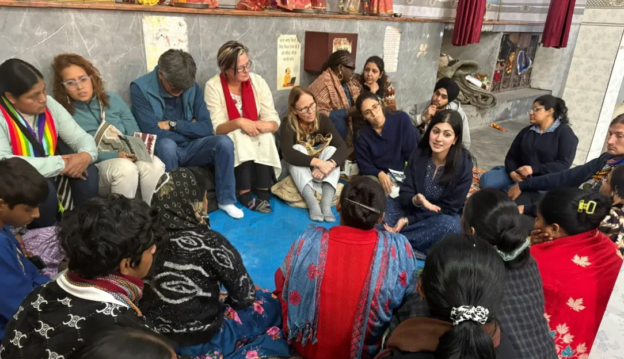
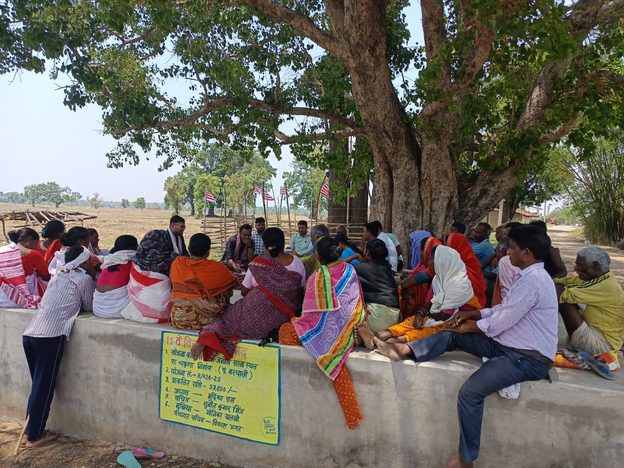
A recent field engagement in Garhwa, Jharkhand, as part of PRIA’s Co-Create initiative, brought this question into sharper focus.
Interactions with communities and local stakeholders in villages including Suli, Chete and Jamouti explored local governance, Gram Sabha processes, water and climate concerns, migration, health, education and natural resources. Discussions also touched on the PESA Act, the Forest Rights Act and the relationship between community rights and formal governance institutions.
One observation stood out: the challenge facing Panchayats is not simply a lack of development programmes, but also the limited connection between local knowledge, community participation and formal governance processes.
In discussions in PESA areas, awareness of PESA provisions and community rights over jal, jungle, zameen remained limited among many community members and local representatives. Participation of migrant workers, women, youth and elderly people in Gram Sabha processes was also uneven.
At the same time, communities possessed rich ecological, cultural and livelihood knowledge that was not always reflected in formal planning. These observations are not representative of every Panchayat in Jharkhand or India. They nevertheless illustrate why decentralisation must be understood through the everyday relationship between institutions and communities, and not only through constitutional provisions or statistics.
More Reads: 5 Participatory Learning Methods and Action Techniques You Can Apply Today
Panchayats, Gram Sabha and Local Planning
This relationship becomes particularly important in local planning.
Water, sanitation, livelihoods, agriculture, health, migration and natural resources are often interconnected. The Gram Panchayat Development Plan (GPDP), therefore, should be more than a list of schemes. Ideally, it should provide a space where local priorities are identified, discussed and translated into collective plans.
Digital systems such as eGramSwaraj can support planning and monitoring, but technology cannot substitute for democratic participation.
The Gram Sabha remains central because elected representatives alone cannot constitute local self-government. Citizens need meaningful opportunities to deliberate, question priorities and influence decisions.
For those seeking to understand decentralisation, Panchayati Raj institutions, Gram Sabha and local governance, the PRIA International Academy course on Panchayati Raj and Decentralisation provides a useful learning resource covering these themes, including the constitutional framework and PESA. Explore the course
Resources Must Follow Responsibilities

Local self-government also requires financial and administrative capacity.
A Panchayat cannot meaningfully exercise responsibility without predictable resources, appropriate personnel and institutional authority. The issue is therefore not simply how much money reaches Panchayats, but whether functions, funds and functionaries are aligned.
Financial support alone cannot create local autonomy if Panchayats lack the authority and capacity to determine how local priorities should be addressed. Strengthening own-source revenue, administrative support and institutional capacity therefore remains important to the decentralisation agenda.
From Scheme Implementation to Local Problem-Solving
The next phase of decentralisation requires Panchayats to move beyond a scheme-by-scheme approach towards integrated local problem-solving.
A village’s water challenge may be connected to agriculture, sanitation, women’s work and livelihoods. Migration may be linked to employment, education and social protection. Climate risks may intersect with forests, agriculture, housing and health.
Panchayats are potentially well placed to bring these concerns together because they operate close to communities. But they need more than funds. They need information, technical support, capable functionaries and meaningful relationships with communities and other institutions.
The Garhwa experience also points to another important resource: local and Indigenous knowledge.
Communities possess knowledge about forests, water, agriculture, seasons, livelihoods and ecological change that formal administrative systems may not fully capture. Recognising this knowledge can make Panchayat planning more grounded and responsive, particularly in PESA areas where governance is closely connected with community rights, natural resources and cultural identity.
More Reads: How to Apply the Theory of Change for Greater Impact in Community Development
Deepening Decentralisation
India does not need to begin decentralisation again. It needs to deepen what has already been created.
Four shifts are particularly important:
- From formal devolution to substantive devolution: Panchayats need responsibilities accompanied by authority, resources and personnel.
- From participation as attendance to participation as influence: Gram Sabhas should be judged by whether citizens can influence priorities and hold institutions accountable.
- From scheme implementation to integrated local planning: Panchayats need the capacity to connect local evidence, community priorities and development programmes.
- From administrative knowledge to locally grounded knowledge: Community experience and Indigenous knowledge should be recognised as legitimate inputs into local governance.
These shifts also create opportunities for stronger partnerships between Panchayats, communities, civil society organisations and higher education institutions. Universities can contribute research, data and technical knowledge, while communities can bring grounded knowledge and lived experience into planning.

Making Decentralisation Meaningful
The history of Panchayati Raj can be understood as a movement through three broad stages: the idea of village self-government, the constitutional institutionalisation of Panchayats, and the still unfinished task of making these institutions capable of exercising meaningful authority.
India has created an extraordinary democratic infrastructure at the grassroots. But decentralisation should not be judged only by the number of Panchayats, elected representatives or meetings held.
The deeper questions are: Who decides? Whose priorities shape local plans? Who controls resources? Whose knowledge is recognised? Who participates in the Gram Sabha? And can Panchayats act on decisions made through these processes?
The answers will determine whether Panchayats remain primarily channels for implementing programmes designed elsewhere or become genuine institutions of local self-government.
The journey from Gram Swaraj to constitutional Panchayati Raj has transformed India’s democratic landscape. The next step is to bring authority, resources, institutional capacity, local knowledge and citizen participation together at the grassroots.
Decentralisation becomes meaningful when people are not merely beneficiaries of development, but participants in deciding what development should mean for their communities.
Explore all articles on the PRIA International Academy Blog.