Archives

Higher educationa & community engagement

Higher Education and Community Engagement

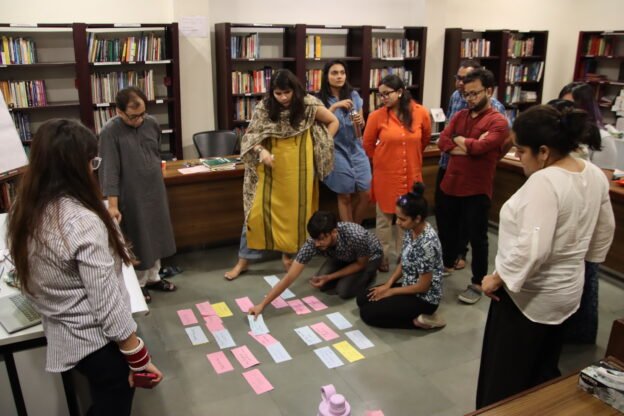
What if universities didn’t just teach about the world, but rolled up their sleeves and worked within it? Higher education and community engagement is the practice built around that idea. The below section walks through what the term means, why it holds weight, how it plays out, and where you can spot it at work.

What is Higher Education and Community Engagement?

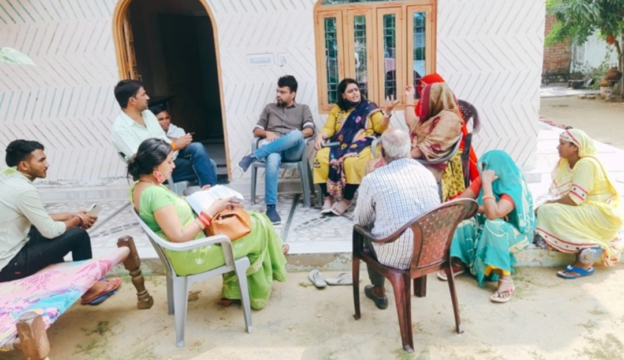
Universities and communities team up to tackle real problems, side by side, instead of one side studying the other from afar. The textbook version puts it as collaborative partnerships between universities and communities to co-create socially relevant knowledge and advance participatory development. Why bother? Because ideas hold up far better when the people they touch have a hand in shaping them.

Why It Matters

  • Closes the distance between academic theory and what communities actually live through day to day
  • Yields knowledge people can use on the ground, not findings that stay locked inside journals and lecture halls
  • Pushes participatory development forward through learning that flows both ways, so communities edge closer to goals they set for themselves

How It Works

Universities and communities show up as equal partners, and each brings something the other can’t. Between them they build research, learning, and development knowledge that carries both scholarly weight and hard-won local insight. None of it gets shelved. What they produce loops back into participatory research and development, steering choices, sparking action, and leaving the community stronger than before.

Real-World Examples

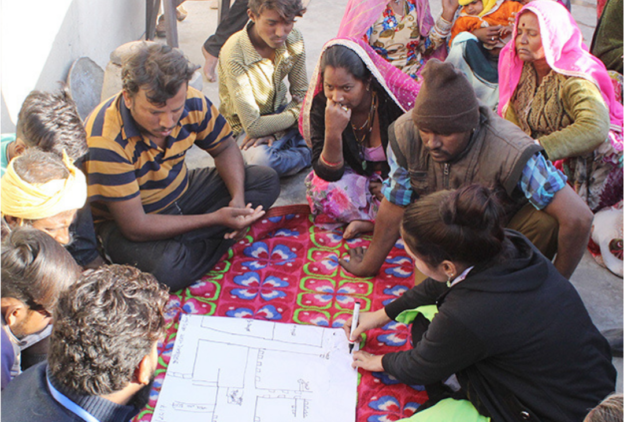
A medical faculty runs a health survey with a rural community, and residents choose which questions matter most for their village. Somewhere else, students and local farmers test soil and water together, turning a class assignment into advice the community can put to use. Or picture a university design studio mapping safer public spaces with a slum settlement, with residents leading every walk-through and review.

Key Takeaway

  • Recasts the university as a real partner, not a spectator on the sidelines
  • Lays a two-way bridge carrying scholarship into society and society back into scholarship
  • Makes higher education and community engagement a spark for shared, lasting change

Keep Exploring

Found this handy? Bookmark it and send it along to anyone curious about how universities and communities build knowledge together. Read related terms next, including Experiential Knowledge and Participatory Monitoring and Evaluation.

PRIA Academy also offers HEI Learning Visits that help higher education institutions understand how the development sector works and build practical skills through field exposure.

Learn more: https://www.priaacademy.org/hei-learning-visits
Horizontal Citizenship

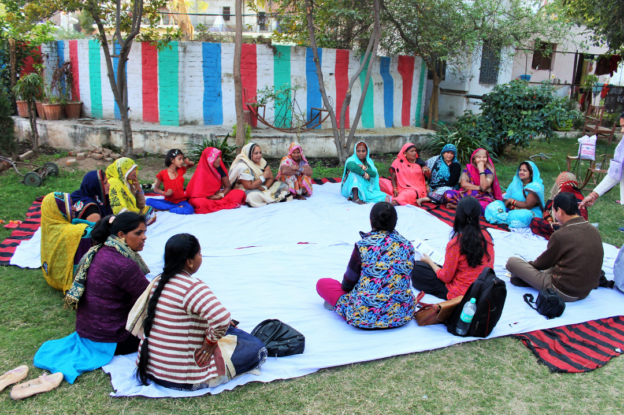
Horizontal citizenship refers to the day-to-day engagement between citizens within a local community. It focuses on the relationships between citizens and their responsibilities towards one another within a community.

Unlike vertical citizenship, which defines the legal and formal relationship between an individual and the state, horizontal citizenship focuses on grassroots connections, mutual aid, and civic duty.

It actively strengthens the social fabric by encouraging participation, mutual respect, and collective responsibility.

What is Horizontal Citizenship?

In simple terms, it focuses on how everyday people treat, assist, and respect each other in a shared space, rather than just how they interact with the government.

Formally, it is grounded in horizontal solidarity, mutual rights, and shared responsibilities among peers. It exists to build strong, resilient communities by encouraging people to work together and support one another from the ground up.

Why Horizontal Citizenship Matters

Horizontal citizenship matters because it shifts the focus from citizen-government to citizen-citizen relationships. 

It encourages people to recognise that they have responsibilities towards one another as members of a shared community. It supports cooperation, inclusion, and collective problem-solving by strengthening relationships between individuals and groups.

It also serves as the foundation for social trust, making it significantly easier for diverse neighbours to unite when facing systemic issues that affect their communities.

How Horizontal Citizenship Works

Horizontal citizenship is put into action through routine civic engagement and mutual reliance. 

This may include participating in local groups, helping neighbours, joining community activities, or contributing to efforts that benefit the wider community.

Through these actions, people build relationships and contribute to the well-being of their communities.

When communities work together to address local issues, support vulnerable groups, or respond to shared challenges, they put the principles of horizontal citizenship into practice.

Examples in Practice

  • Mutual aid networks during COVID-19: During the COVID-19 pandemic, neighbourhood groups across India and many other countries organised food, medicines, and other forms of support for people who could not leave their homes. These efforts were led by community members themselves, who identified local needs and worked together to help others in their area.
  • Neighbourhood Watches: Residents collaborate to patrol local streets, share safety information, and look out for one another’s homes.
  • Community-Led Activities: Community members work together on local activities such as maintaining public spaces, organising neighbourhood events, or addressing issues affecting their area.

Key Takeaway

Horizontal citizenship highlights the role citizens play in supporting one another and contributing to the well-being of their communities.

It strengthens cooperation, trust, and collective responsibility, helping communities work together around shared concerns and common goals.

Further Learning

Horizontal citizenship is closely linked to concepts such as citizen participation, grassroots leadership, community mobilisation, and social cohesion.

Explore related glossary terms to learn more about the approaches that strengthen participation, inclusion, and collective action within communities.

Institutional Strengthening

Institutional Strengthening

An organisation may have a clear purpose, committed people and enough funding to begin its work. But what happens when a key person leaves, funding changes, or the organisation suddenly has to work at a much larger scale?

That is where institutional strengthening matters. It focuses on something easy to overlook: whether the organisation itself is strong enough to continue doing its work well over time.

What Is Institutional Strengthening?

Institutional strengthening is the process of improving an organisation’s internal systems, skills, leadership and structures so that it can function effectively and with greater independence.

This could involve strengthening financial management, developing staff skills, improving governance, clarifying responsibilities or creating better systems for communication and decision-making.

The aim is not simply to complete one project successfully. It is to leave the institution better equipped for whatever comes next.

Why Does Institutional Strengthening Matter?

Weak internal systems do not always cause obvious problems straight away. They often become visible during change.

If critical knowledge is known only by one senior employee, what happens when that person leaves the organisation? If responsibilities are unclear, who makes decisions during a complex situation? If an organisation depends heavily on one source of funding, can its work continue when that support ends? Institutional strengthening helps organisations prepare for these circumstances. Stronger systems can preserve knowledge, improve accountability and make it easier to adapt when circumstances change.

How Does It Work?

The process usually starts by closely examining how an institution currently operates and identifying gaps.

The solution depends on what those gaps are. One organisation may need leadership development, while another may need clearer financial procedures, better digital record-keeping or stronger governance practices.

It is also rarely a one-time exercise. Institutional strengthening works best when improvements are tested in everyday situations, reviewed and adapted as the organisation grows.

Institutional Strengthening in Practice

For example, a rural cooperative that manages its accounts informally. By developing proper bookkeeping and transparent decision-making processes, it may become more prepared to manage larger funds or approach a bank independently.

Similarly, an NGO might develop new leaders so its future does not depend entirely on its founders’ shoulders. A local administration can improve its data systems to understand whether public services are actually reaching the communities they are meant to serve.

Key Takeaway

At its simplest, institutional strengthening means helping an organisation become stronger from within. It builds the people, processes and systems needed to adapt, make sound decisions and continue working towards its purpose over the long term.

Explore the PRIA International Academy glossary to discover related concepts such as capacity building, organisational development and participatory governance.

Local Governance

Local governance is the management of a specific geographic area, such as a city, town, or village, by local authorities elected by residents. It refers to the systems and processes through which decisions are made and services are delivered at the local level.

It bridges the gap between state structures and everyday citizens, creating opportunities for people to participate in decisions that affect their daily lives. 

It plays an important role in planning, service delivery, and addressing issues that affect towns, cities, villages, and neighbourhoods.

What is Local Governance?

It refers to how local institutions manage public affairs, allocate resources, and respond to community needs. 

That means decentralised decision-making and service delivery systems strengthened through active citizen engagement and accountability. It exists because local institutions are structurally positioned to understand local priorities and respond to issues affecting their communities.

Why Local Governance Matters?

Local governance institutionalises decision-making directly where its impacts are felt.

It helps improve the delivery of services such as water supply, sanitation, roads, waste management, healthcare, and local infrastructure by eliminating centralised bureaucratic delays.

It also strengthens accountability by creating opportunities for citizens and local institutions to engage with one another on issues affecting the community.

How Local Governance Works

Local governance functions through elected bodies like municipalities in cities and panchayats in villages. These councils debate and vote on local laws, budgets, and town planning initiatives to address community needs.

These institutions are vested with statutory authority to plan local development activities, deliver services, manage resources, and address community concerns.

The system stays functional through active citizen engagement and strict accountability. Residents use public meetings, social audits, and local elections to monitor performance and ensure leaders remain responsive to the community.

Local Governance in Action

Gram Sabha Meetings, India

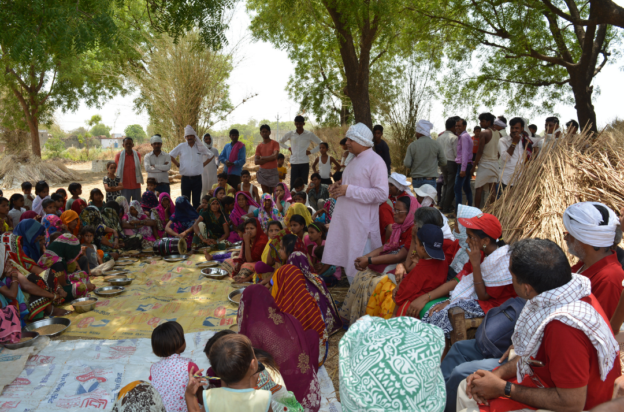
The Gram Sabha – a meeting of all adult voters in a village is the primary democratic forum of the Panchayati Raj system. Communities use it to approve plans, review expenditure, raise complaints, and elect representatives.

Where Gram Sabhas meet regularly and function actively, they have produced measurable improvements in the planning and delivery of local services.

Urban Local Bodies

Several Indian cities have experimented with participatory budgeting processes in which residents identify local infrastructure priorities that feed into the official municipal budget. 

Where these processes are genuine rather than consultative in name only, they direct funds towards needs that ward-level officials had not prioritised themselves.

Key Takeaway

Local governance dismantles top-down administrative monopolies, anchoring public service delivery directly within the communities they serve. 

It supports greater participation, accountability, and responsiveness by strengthening the role of local institutions in addressing community needs.

Further Learning

Local governance is closely linked to concepts such as decentralisation, citizen participation, social accountability, and participatory planning.

Explore related glossary terms to learn more about the approaches that support inclusive and responsive governance at the local level.

Panchayats

Ask someone in rural India who actually decided where the new handpump went, and they usually won’t say “the state government.” They’ll name their Panchayat,  the body a few streets away.

What are Panchayats?

A Panchayat is an elected local government, operating at the village, block, and district level across India, together making up what’s called the Panchayati Raj system. They’re not informal community groups or a place to drop a suggestion and hope someone reads it. They’re constitutional bodies, meaning their existence and powers are written into the Indian Constitution itself, with real authority over local budgets, roads, water supply, schools, and sanitation.

There are technically three tiers, the Gram Panchayat at village level, the Panchayat Samiti at block level, and the Zila Parishad at district level, each elected directly by residents and each responsible for planning and spending within its area. But underneath all that structure sits one simple fact: decisions about a village don’t get made somewhere far off and handed down. They get made by the people who actually live there.

Why It Matters?

Nobody sitting in a state secretariat has seen the well that’s been dry since March. They don’t know which road turns to unusable mud every monsoon, or which family’s been carrying water twice the distance because of it. That kind of thing you only know by living near it, which is really the whole case for keeping governance local.

How does it work?

Each village selects by election its own Gram Panchayat directly. Above that sit block and district panchayats. Decisions are meant to start at the Gram Sabha, an open village meeting where anyone can stand up and raise a problem, before moving up the chain of command. Money gets spent on what the village itself flagged as urgent.

Real-World Examples

There’s a Panchayat in Rajasthan that had turned down a brand-new community hall the state was offering to fund. Instead, asked for a broken handpump to be fixed. One that had been sitting idle for eight months by that point. Nobody sitting in a state office would’ve known that pump mattered more than a shiny new building. Compare that to the schemes designed the other way round, top-down, where a borewell’s depth gets decided on paper somewhere, for a water table that turns out to sit nowhere close to what the file assumed.

Key Takeaway

A Panchayat is really just people governing the place where they live. Elections, tiers, budgets,  all of it is just scaffolding built around that one basic idea.

How does decentralisation actually play out on the ground? PRIA International Academy’s Understanding Panchayati Raj Institutions course explores how local democracy functions across India.

PRIA Approach to Participatory Training Methodology 

Participatory Action Research (PAR)

What changes when the people usually called “research subjects” begin asking the questions, interpreting the findings and deciding what should happen next?

That idea sits at the heart of Participatory Action Research (PAR). Instead of studying communities from the outside, PAR involves people directly in understanding the issues that affect their lives and using that knowledge to work towards change.

What Is PAR?

Participatory Action Research, or PAR, is an approach to research in which community members and researchers work together throughout the process.

People are not involved simply as respondents who answer questions or provide information. They may help identify what needs to be studied, frame research questions, collect information, make sense of findings and decide how those findings can be used.

This approach recognises that knowledge does not come from academic expertise alone. People develop valuable knowledge through lived experience, whether they are farmers responding to changing agricultural conditions, workers navigating unsafe workplaces or residents dealing with gaps in public services.

PAR brings these different forms of knowledge together.

Why Does PAR Matter?

Someone living with a problem every day will often notice things an outside researcher may miss.

A survey, for instance, might reveal that residents in an informal settlement have limited access to sanitation. Residents themselves can explain what that actually means: which facilities are difficult to reach, when they become unsafe to use, who is most affected and why previous solutions have failed.

PAR makes space for this knowledge.

It also changes the relationship between the researcher and the community. Research is conducted with people rather than simply about them, giving communities a greater role in producing and using knowledge that concerns their own lives.

How Does Participatory Action Research Work?

PAR usually follows a continuing cycle of action and reflection.

A community and researchers may begin by identifying an issue together. They gather and discuss evidence, plan an action, observe what happens and reflect on what they have learned. That learning then shapes the next round of action.

Because the process is iterative, the research can change as new questions and insights emerge.

What Does PAR Look Like in Practice?

Farmers might work with researchers to understand the decline in soil quality, test different practices, and compare outcomes across growing seasons.

Workers in the informal economy might document workplace conditions themselves and use the evidence to advocate for safer practices. Communities can also map gaps in water, sanitation or other public services and use their findings to engage with local authorities.

In each case, research becomes something people actively participate in and use.

Key Takeaway

Participatory Action Research turns research into a shared process of learning, reflection and action. Communities contribute not only information but also knowledge, interpretation and decisions about what happens next.

Explore PRIA International Academy’s learning resources and courses to deepen your understanding of PAR, community-based participatory research, and knowledge democracy.

Participatory Governance

Participatory Governance involves citizens in discussions and decisions about issues that affect their lives.

It institutionalises direct channels for people to contribute their views, share local knowledge, and take part in governance processes beyond voting in elections.

It empowers citizens and non-state actors to directly influence public decision-making.

Rather than solely relying on elected officials, it incorporates community feedback into policy formulation, making local services and urban planning more transparent, accountable, and aligned with community needs.

What is Participatory Governance?

In simple terms, it means letting everyday people help make decisions that affect their community and monitor progress.

Formally, it refers to governance systems that actively involve citizens in planning, budgeting, monitoring, and policy decision-making. It exists to make public institutions more transparent and ensure government spending matches real community needs.

Why does it matter?

Participatory governance drives structural inclusion and transparency by creating non-negotiable spaces for different groups to contribute to public decision-making.

It can help ensure that public resources are used in ways that reflect community priorities and local needs. It also strengthens vital trust between citizens and institutions, systematically reducing conflict and corruption.

How Participatory Governance Works

Participatory Governance creates opportunities for citizens to take part in discussions about local issues and development activities.

People participate through village meetings, public consultations, community groups, participatory budgeting exercises, and other local forums where community concerns are discussed.

These spaces allow citizens to share their experiences, discuss priorities, and provide feedback on public services and development programmes.

Public institutions are then structurally pressured to embed this data directly into their official frameworks for planning, budgeting, service delivery, and development programs.

Examples in Practice

Gram Sabha Meetings, India:

Under the Panchayati Raj system, village residents come together to discuss local issues, review community activities, and share their views on development priorities. These meetings provide an opportunity for people to participate in decisions affecting their village.

PRIA has worked extensively with communities and elected members to strengthen how these forums function in practice.

Community Monitoring Initiatives:

Across several states, communities have actively participated in monitoring the National Rural Employment Guarantee Scheme – verifying that work was completed, wages were paid correctly, and records matched reality.

This ongoing oversight has been one of the most effective accountability mechanisms.

Key Takeaway

Participatory Governance creates opportunities for citizens to take part in decisions that affect their communities.

It helps strengthen transparency, accountability, and collaboration between citizens and public institutions.

Further Learning

Participatory Governance is closely linked to concepts such as local governance, decentralisation, citizen participation, and social accountability.

Explore related glossary terms to learn more about the approaches that support inclusive and responsive governance.