
Archives
Decentralisation
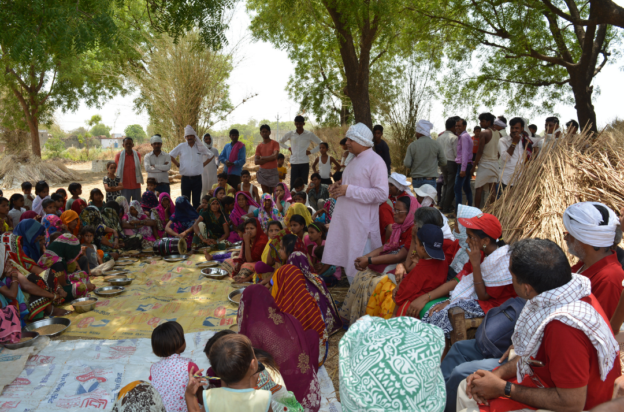
Decentralisation means giving local institutions a greater role in decision-making that affects their communities. It allows decisions to be made closer to the people who are directly affected by them.
It involves sharing authority, responsibilities, and resources with local institutions so that decisions can be made closer to where issues arise.
Decentralisation aims to strengthen local governance by giving communities and local bodies a greater role in planning, implementation, and decision-making.
What is Decentralisation?
In simple terms, decentralisation means the shifting of power and responsibilities from central authorities to local institutions.
More formally, it refers to the transfer of authority, resources, and decision-making powers from the central government to local institutions to strengthen democratic governance.
By bringing governance closer to citizens, decentralisation can improve communication between institutions and communities. It can also create more opportunities for people to participate in decisions that affect their daily lives.
Why Decentralisation Matters
Governments often need to respond to different social, economic, and environmental conditions across regions. Local institutions are usually better placed to understand these differences and respond to the needs of their communities.
It provides local bodies with legal autonomy to respond more effectively to local issues and creates opportunities for greater public participation in decision-making processes.
It also strengthens democratic governance by encouraging accountability, representation, and local ownership of development processes.
How Decentralisation Works
Decentralisation involves transferring responsibilities, resources, and decision-making powers from higher levels of government to local institutions.
These responsibilities may be assigned to panchayats, municipalities, district councils, or other local governance bodies, depending on the context.
As local institutions take on greater responsibilities, decisions related to planning, service delivery, and development can be made closer to the communities they affect.
Examples in Practice
- Panchayati Raj System, India:
The Panchayati Raj system gives elected local governments an important role in planning and implementing development activities in rural areas. It is one of India’s most significant examples of decentralised governance. - Urban Local Bodies in India:
Municipal corporations and local councils are responsible for services such as water supply, sanitation, roads, and waste management. These institutions help address local issues and deliver services within cities and towns. - Participatory Planning Processes:
In some areas, local governments involve community members in identifying development priorities and discussing local needs. These discussions help inform planning and implementation at the local level.
Key Takeaway
Decentralisation brings decision-making closer to communities by strengthening the role of local institutions in governance and development.
It supports more responsive, representative, and locally informed decision-making by enabling local institutions to play a stronger role in addressing community needs and priorities.
Further Learning
Decentralisation is closely linked to concepts such as local governance, citizen participation, social accountability, and participatory planning.
To learn more about decentralisation in practice, explore PRIA International Academy’s Understanding Panchayati Raj Institutions: Decentralisation, Democracy and Local Governance course, which examines how local governance and decentralised decision-making work in India.
Digital Participation
Imagine if your voice in governance was just a click away?
As digital technologies become part of our everyday life, they are also changing how people engage with public institutions and civic issues. This shift is often described as Digital Participation. In this glossary, we explore what digital participation is, why it matters, how it works, and how digital spaces can strengthen citizen engagement and democratic processes.
What is Digital Participation?
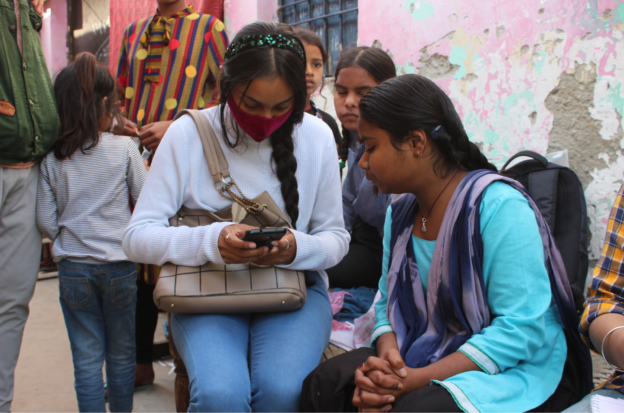
In simple terms, Digital Participation is the use of technology to help people take part in decisions, discussions, and activities that shape their everyday lives. Instead of participating only through face-to-face meetings, citizens can also engage using online platforms and digital tools.
More technically understood, Digital Participation is the use of digital tools and platforms to enable citizen engagement, advocacy, and participatory governance. It exists to extend participation into digital spaces, making it simpler for people and institutions to connect, collaborate, and contribute to public decision-making.
Why does it matter?
Digital Participation transcends the constraints of physical locations, allowing more people to contribute regardless of geography or time limitations. It helps in faster communication between citizens and institutions, supports broader public consultations, and creates new pathways for advocacy, collaboration, and civic learning. When used thoughtfully, digital tools can make participation more accessible while complementing traditional forms of democratic engagement.
How does it work?
Digital Participation relies on tools such as online consultations, e-governance platforms, digital surveys, discussion forums and virtual community meetings. These platforms allow citizens to share feedback, contribute ideas and participate in public dialogue. Institutions, in turn, can respond more efficiently, gather diverse perspectives and improve transparency. Learning also plays an important role, with educational programmes and academy courses increasingly using digital tools to strengthen civic knowledge, participation skills and collaborative learning.
Real-World Examples
Many local governments now use e-governance platforms to provide public services, collect citizen feedback and improve communication with residents. Online consultation processes invite communities to comment on development plans, urban projects or public policies before decisions are finalised. Educational institutions and civil society organisations also use webinars, digital learning platforms and virtual discussions to help citizens better understand governance processes and participate more confidently in civic life .
Digital tools are also opening up new ground in skill-building itself, PRIA’s Skill Building and Technical Training for Girls project is one example of how training and technology are being brought together to widen participation for groups who’ve traditionally had less access to both.
Key Takeaway
Digital Participation brings civic engagement into the digital age, creating new opportunities for citizens and institutions to connect, collaborate and shape public life together.
Continue Your Learning
If you found this glossary useful, do bookmark it for future reference and share it with anyone who is keen and interested in civic engagement and participatory development. You may also enjoy exploring related glossary terms such as Citizen Participation and Participatory Governance to understand how digital and in-person participation work together to strengthen democracy
E
Evidence-Based Policymaking
What if policies were built on facts from the people they affect, not assumptions?
Have you ever noticed how the same policy can mean different things to different people?
A report may call it a success. Someone in the community may quietly say, “It didn’t work for us.”
Neither response should be ignored.
This is where Evidence-Based Policymaking becomes important. It encourages us to understand a problem before trying to solve it. On this page, you’ll learn what Evidence-Based Policymaking is, why it matters and how different kinds of evidence help shape better public decisions.
What is Evidence-Based Policymaking?
When we hear the word evidence, we often think about research reports or government data.
They matter. But they are not the only source of evidence.
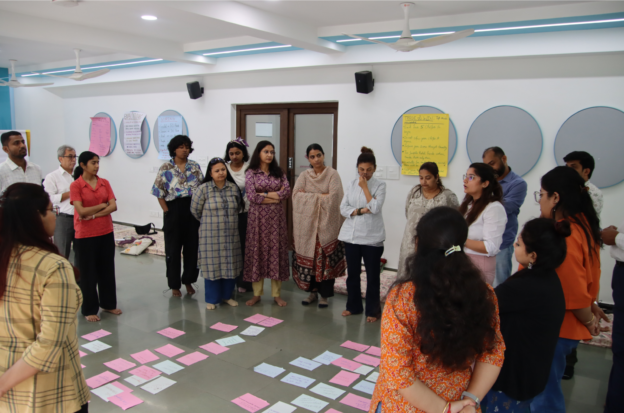
People’s experiences matter too. A conversation in a village meeting, feedback from a public consultation or a pattern that keeps appearing across different communities can all tell us something worth paying attention to.
In simple terms, Evidence-Based Policymaking means making public decisions using reliable evidence instead of assumptions.
More formally, it is policy formulation grounded in systematic research, citizen-generated data, and participatory evidence processes. It brings research and people’s experiences into the same conversation, helping connect evidence with public decision-making.
Why It Matters
Policies are written with people in mind. It makes sense, then, that people should have a place in understanding whether those policies are working.
Research may tell us what has changed. Citizen-generated data often helps explain why.
When both are considered together, decisions become more informed, more transparent and more closely connected to what communities are actually experiencing.
How It Works
Evidence comes from different places. Researchers may carry out participatory surveys. Communities may share their experiences through Citizen Report Cards or community scorecards. These methods help capture perspectives that are not always visible in official records.
The evidence is then discussed with policymakers. Instead of relying on assumptions alone, decisions are informed by research, community knowledge and ongoing dialogue.
Real-World Examples
A district reviews its healthcare data and sees that more people are visiting local clinics. The numbers look encouraging. Then Citizen Report Cards reveal that many older residents still struggle to reach those clinics because transport is unreliable.
In another community, parents, teachers and local officials use community scorecards to discuss local schools. Together, they identify challenges that attendance figures alone could not explain. Looking at both evidence and experience leads to a fuller understanding of the situation . If you’d like to go a step further, PIA’s course, Participatory Research: A Journey Beyond Conventional Research, walks through how participatory methods generate the kind of evidence discussed here, the sort that surfaces alongside official data rather than instead of it.
Key Takeaway
Evidence-Based Policymaking reminds us that good decisions are built on more than data. They are strengthened when research and people’s experiences are considered together.
Continue Learning
At PIA, we believe that listening is an important part of learning. If you found this glossary useful, bookmark it and share it with others. You can also explore Citizen Report Card and Participatory Monitoring and Evaluation to learn how communities contribute to better public decision-making.
Experiential Knowledge
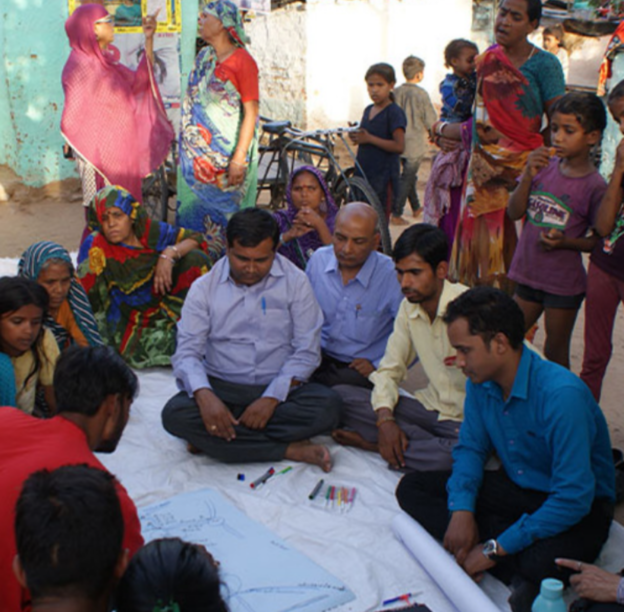
Think about the person everyone turns to in a village when the rains are late. It may not be a scientist. It may be someone who has worked on the same land for forty years.
That doesn’t make one kind of knowledge more valuable than the other. It simply reminds us that people learn in different ways. Some through study. Others through living, doing and adapting. Experiential Knowledge is about recognising that lived experience has something important to teach us. On this page, we’ll explore what it means and why it matters.
What is Experiential Knowledge?
Some things can only be understood by living through them.
A community rebuilding after floods. A group of women finding ways to improve safety in their neighbourhood. A farmer noticing small changes in the soil long before they appear in a report.
These experiences become knowledge.
Experiential Knowledge is the understanding people gain through their lived realities, everyday practices and the challenges they face together.
More formally, it is knowledge rooted in citizens’ lived realities, everyday practices and collective struggles, recognised as indispensable to democratic participation and social transformation. It reminds us that learning doesn’t happen only in classrooms or institutions. It also happens in homes, fields, workplaces and communities.
Why It Matters
Not every kind of knowledge is documented.
Some of it is passed down through stories. Some through practice. Some simply by doing something over and over again.
When we recognise Experiential Knowledge, we recognise that communities are not only participants in change. They are also a source of insight. Their experiences help shape better decisions, deepen democratic participation and turn everyday struggles into opportunities for collective learning.
How It Works
Experiential Knowledge grows quietly.
It grows when neighbours solve problems together, when traditions are passed from one generation to the next, when communities reflect on what has worked and what has not.
Participatory approaches create space for these experiences to sit alongside formal and technical knowledge. Rather than treating one as more important than the other, they encourage dialogue between different ways of knowing. That is often where new ideas begin.
Real-World Examples
After years of changing weather, a farming community notices shifts in rainfall before researchers publish their findings. Oral histories can preserve memories of rivers, forests and local traditions that maps cannot capture. Grassroots groups often develop practical ways of responding to issues such as water shortages or public safety simply because they have lived with those challenges for years. Their experiences become knowledge that others can learn from.
Key Takeaway
Experiential Knowledge reminds us that expertise is not found in one place. It grows wherever people observe, adapt, reflect and learn from their own lives.
Continue Learning
At PIA, we see learning as a conversation between different kinds of knowledge. If this glossary sparked your curiosity, bookmark it and share it with others. You may also enjoy exploring Grassroots Leadership and Arts-Based Methodologies, where lived experience continues to shape participation, learning and social change.
For a closer look at how these ideas play out in practice, see our piece on participatory learning methods.
G

Gender Mainstreaming
A training session gets scheduled for 9am. Simple enough, until you realise that’s exactly when women in that community are cooking, getting kids ready, fetching water. So they aren’t able to come. Nobody excluded them on purpose.
Nobody excluded them at all, really. The schedule just never asked. That’s Gender Mainstreaming: catching the thing nobody meant to do, before it happens organically.
What is Gender Mainstreaming?
Gender Mainstreaming means checking how a programme affects women, men, and other genders differently, at every stage, not just once at the end when it’s too late to fix. It connects who a programme was designed for with who it actually reaches.
That means asking who gets consulted, who benefits, and who’s likely to be left out when a plan is finalised, not after someone points out the gap. Most programmes are first designed and hope they work for everyone. Gender Mainstreaming doesn’t let you work like that. It makes teams say out loud who they had assumed would be reached when they built the thing.
Why Does it Matter for you?
Skipping this step usually doesn’t stem from bad intentions. It comes from nobody asking the question early enough. Building Gender Mainstreaming into your process means testing that assumption before the budget’s spent, not after the programme quietly underserves half the people it was meant for. It’s also what makes evaluation mean something, since you can only measure whether something worked for everyone if you actually planned for everyone.
How does it work?
Most teams start with who they assume will benefit. Then they ask: is that actually true? Who’s likely missing from that picture, and why? Time. Mobility. Safety. Access to a phone or a bank account.
Each question uncovers another assumption worth looking into. The output is usually a set of questions looked at every stage, not a document signed off once. The questions matter more than the paperwork.
Real-World Examples!
Take a farming programme handing out new equipment. Working backwards: who does the actual planting? Mostly women. Who shows up to the training sessions? Mostly men, because of their schedules. The equipment ends up in the wrong hands, not because anyone decided that, but because nobody checked who the training was actually reaching.
This is exactly what Gender Mainstreaming catches. Not after the equipment’s sitting unused, but before it was ever handed out.
Key Takeaway for you
Good intentions and good design aren’t the same thing. Gender Mainstreaming is really just a habit of asking “who did we just assume this was for?” before committing to a plan, and staying honest enough to actually check.
If you’ve ever struggled to answer “who is this actually reaching?”, you’re not alone. PRIA International Academy’s Gender Realities: Identities, Inclusion and Development course helps build that instinct into everyday development work.
Grassroots Leadership
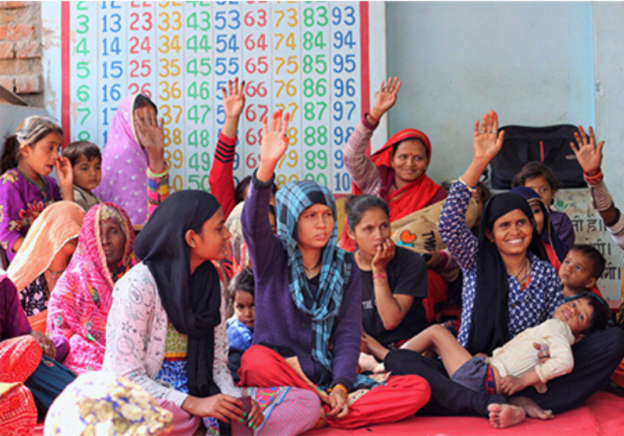
Grassroots leadership is a transformative approach in which influence, vision, and action emerge organically from within a community or organisation; it’s an effective means of effecting community change.
This approach empowers everyday individuals who take the initiative to address issues affecting their communities and encourages others to participate in finding solutions.
It plays an important role in strengthening community participation, collective action, and local decision-making.
What is Grassroots Leadership?
It means that community members step in to lead, organise, and improve their own surroundings, relying on personal insight and shared struggles rather than being appointed from above.
That means leadership comes from within a community. It involves ordinary people stepping up to address issues that directly affect their lives, using their insights and experiences to drive a significant change.
Why does it matter?
Grassroots itself means starting from the ground up, with ordinary people in communities bringing about change rather than those in power.
These leaders understand their communities’ needs and take an active role in addressing issues that affect their daily lives. When local leaders spearhead initiatives, community-owned change occurs because the solutions belong to the people who build them, not to an outside agency.
How does it work?
Grassroots leadership is a bottom-up approach where individuals from the community drive change organically. It works by relying on lived experience, deep local trust, and shared values to rally neighbours and address immediate, community-level needs.
They may organise meetings, raise awareness about local issues, encourage participation, or bring communities together around shared concerns. They act as a link between communities and institutions.
Leaders translate community experience into specific demands and hold decision-makers to account – often through the same accountability tools that social accountability processes rely on.
Real-World Examples
- Self-Help Groups (SHGs), India:
Women participating in Self-Help Groups often take on leadership roles within their communities. They help organise meetings, support collective decision-making, and address local issues affecting group members. - Community Health Volunteers:
In many communities, local volunteers help raise awareness about health issues, share information, and connect people with health services. Their work is often based on trust and regular engagement with community members. - Local Development Committees:
Community members involved in local committees often take the lead in identifying priorities, organising activities, and engaging with local authorities on issues affecting their area.
Key Takeaway
Grassroots leadership begins within communities and is built on trust, participation, and shared action. It helps communities organise around local priorities and strengthens their ability to engage with institutions and decision-making processes.
Explore More
Grassroots leadership is closely linked to concepts such as citizen participation, community mobilisation, decentralisation, and social accountability.
Explore related glossary terms to learn more about how communities contribute to inclusive and participatory development.