Key Takeaways
- Participatory training shifts learning from one-way content delivery to a process participants actively help shape – through dialogue, reflection, and hands-on activity.
- A participatory learning approach designs the learning process itself around participants’ experience and context, rather than a fixed top-down curriculum.
- Five widely used participatory training methods: structured group discussions (dialogue circles), role plays and simulations, participatory mapping, case studies, and reflection-based action planning.
- Participatory training techniques work because they ground abstract ideas in real, lived situations – making learning easier to retain and act on.
- Ending a session with reflection and action planning is what turns discussion into follow-through, rather than letting insights stay theoretical.
- Effective facilitation isn’t a fixed skill – it develops through practice, reflection, and adapting methods to each group’s context.
Why Participatory Training Matters
Across training and capacity-building spaces, learning is still approached as a one-way process, where information is delivered rather than explored.
However, in practice, learning tends to become more meaningful when participants are actively involved in shaping it. This is where participatory learning methods and action become important.
Rather than focusing only on content delivery, they create spaces for dialogue, reflection, and shared analysis. In doing so, participatory training methods help connect learning with lived experience, making it more relevant and actionable.
The following examples highlight how commonly used participatory training techniques can be applied in practice.
What Is Participatory Training?
Participatory training is a training approach in which participants co-create knowledge through dialogue, reflection, and hands-on activity, rather than passively receiving information from a facilitator. It is closely tied to what is often called a participatory learning approach – one where the design of the learning process itself is shaped around participants’ experiences, questions, and context, rather than a fixed curriculum delivered top-down.
The participatory training methods covered in this guide – structured group discussions, role plays, participatory mapping, case studies, and reflection-based action planning – are among the most widely used participatory training techniques in capacity-building and community development work today.
Structured Group Discussions (Dialogue Circles)
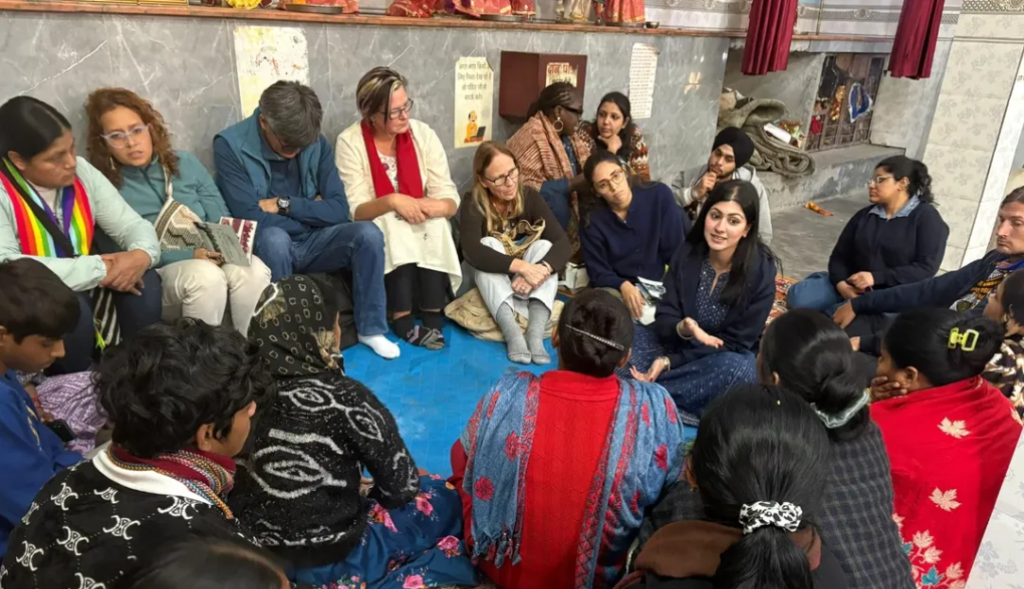
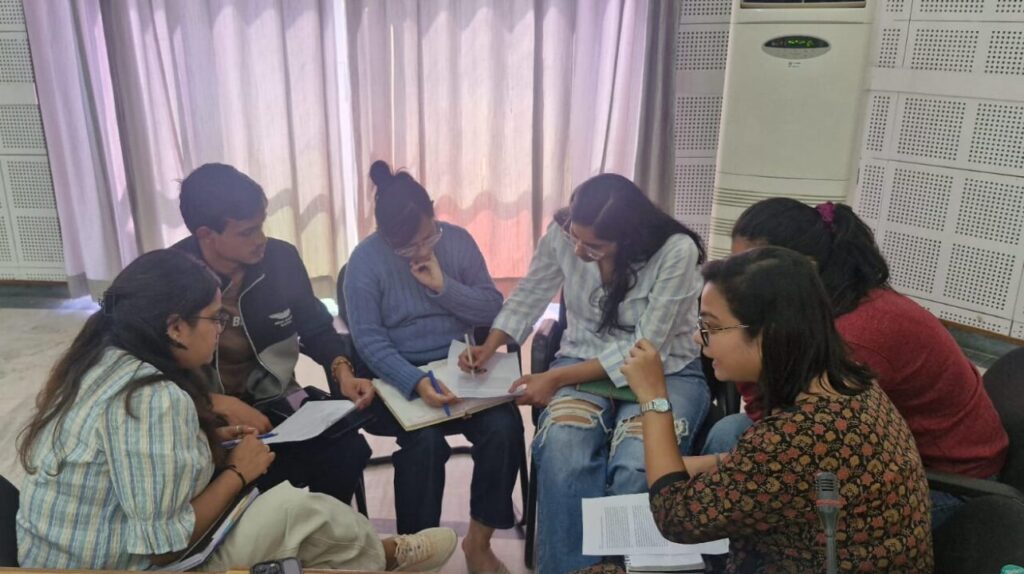
One of the widely used participatory learning methods is structured group discussion. Instead of presenting information, facilitators create space for participants to reflect on a shared issue.
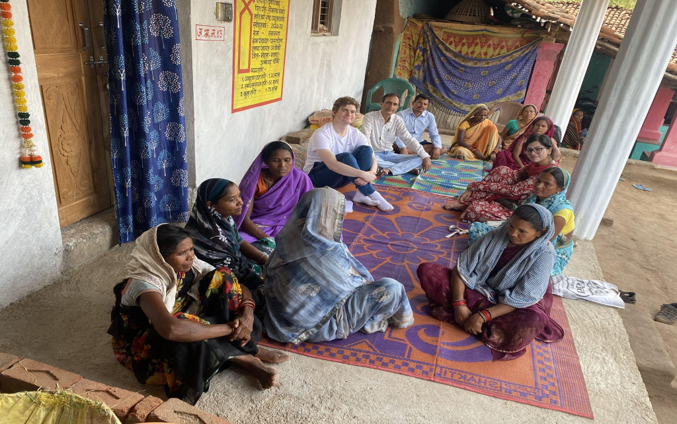
In practice, this involves small groups discussing real situations while facilitators guide the conversation through questions rather than answers. As perspectives are shared, a more collective understanding begins to take shape.
This approach works in part because it brings together diverse experiences and encourages more equal participation. It also helps ground learning in real contexts rather than abstract ideas.
In many cases, beginning with an open-ended question instead of a presentation can significantly shift how a session unfolds.
More Reads: How to Apply the Theory of Change for Greater Impact in Community Development
Role Plays and Simulations
Some aspects of learning are difficult to fully grasp through discussion alone. This is particularly the case when dealing with situations that involve decision-making, negotiation, or conflict.
Role plays and simulations address this by allowing participants to engage directly with real-life scenarios. By stepping into different roles, such as community members or local officials, they begin to see how actions unfold and how different viewpoints interact.
Participatory Mapping
Participatory mapping brings a visual dimension into the learning process. Participants work together to draw representations of a community, system, or issue they are trying to understand.
As these maps take shape, pattern gaps and relationships begin to emerge that often highlight aspects that may not surface in conversation alone.
As part of participatory learning methods and action, this approach helps groups build a shared perspective, making complex situations easier to understand.
More Reads: Why Is PRIA’s Participatory Approach the Need of the Hour
Case Studies
Consider a situation where a programme achieves limited impact despite strong planning. When explored as a case, such cases often reveal gaps between intent and practice.
Case studies use real or context-based examples to examine decisions, outcomes, and underlying factors. It helps connect theory with practice, enabling participants to reflect on how similar situations might unfold in their own contexts.
Reflection and Action Planning
A learning process can lose momentum when they end without a clear sense of direction. While discussions may generate useful insights, these do not always translate into action.
Reflection and action planning help address this by connecting learning with next steps. Participants consider what stands out for them and how it relates to their own context, before identifying what they might do differently moving forward.
As part of a participatory training method, this step helps ensure that learning is carried into practice rather than remaining at the level of discussion.
More Reads: Why Participatory Research Tools Matter for Development Sector Professionals?
Conclusion
Participatory learning is not about engaging people in the process; it is about enabling them to shape outcomes. When applied thoughtfully, participatory training techniques create learning environments that are reflective, contextual, and action-oriented.
Whether the goal is to strengthen a specific participatory learning approach or to build a broader repertoire of participatory training methods, the common thread is the same: learning works best when it is built with participants, not delivered to them.
Effective facilitation depends on how these approaches are adapted to specific groups and contexts. This is not a fixed skill, but one that develops over time through experience, reflection, and continued learning.
Structured opportunities for such learning, such as those offered by PRIA International Academy’s course on Facilitating Learning, can help practitioners strengthen their ability to apply participatory approaches in meaningful ways.
Frequently Asked Questions
What is participatory training?
Participatory training is a facilitation approach where participants actively shape the learning process through dialogue, reflection, and shared activity, rather than passively receiving content.
What are participatory training methods?
Participatory training methods include structured group discussions, role plays and simulations, participatory mapping, case studies, and reflection-based action planning – techniques that ground learning in participants’ own experience and context.
What is a participatory learning approach?
A participatory learning approach designs the learning process itself around participants’ experiences and questions, using dialogue and collective reflection instead of a fixed, top-down curriculum.
What is the difference between participatory learning and participatory training?
Participatory learning refers broadly to the collaborative process of gaining knowledge through participation, while participatory training refers to the structured sessions or programmes designed to build that capacity using participatory training techniques.